

Good baggy jeans do not have to be expensive. The right pair is defined first by its proportions: a secure waist, room through the seat and thigh, a wide leg that falls naturally and enough length to work with your footwear.
This guide explains what changes across affordable, mid-range and premium denim, where spending more genuinely improves quality and how to judge value before buying. You can compare the silhouettes selected for the store in Baggy Bliss or browse the wider trousers collection.
Buy the cut first, the denim second and the label last.
For most wardrobes, £40–£80 offers the strongest balance of considered proportions, dependable fabric and everyday durability.
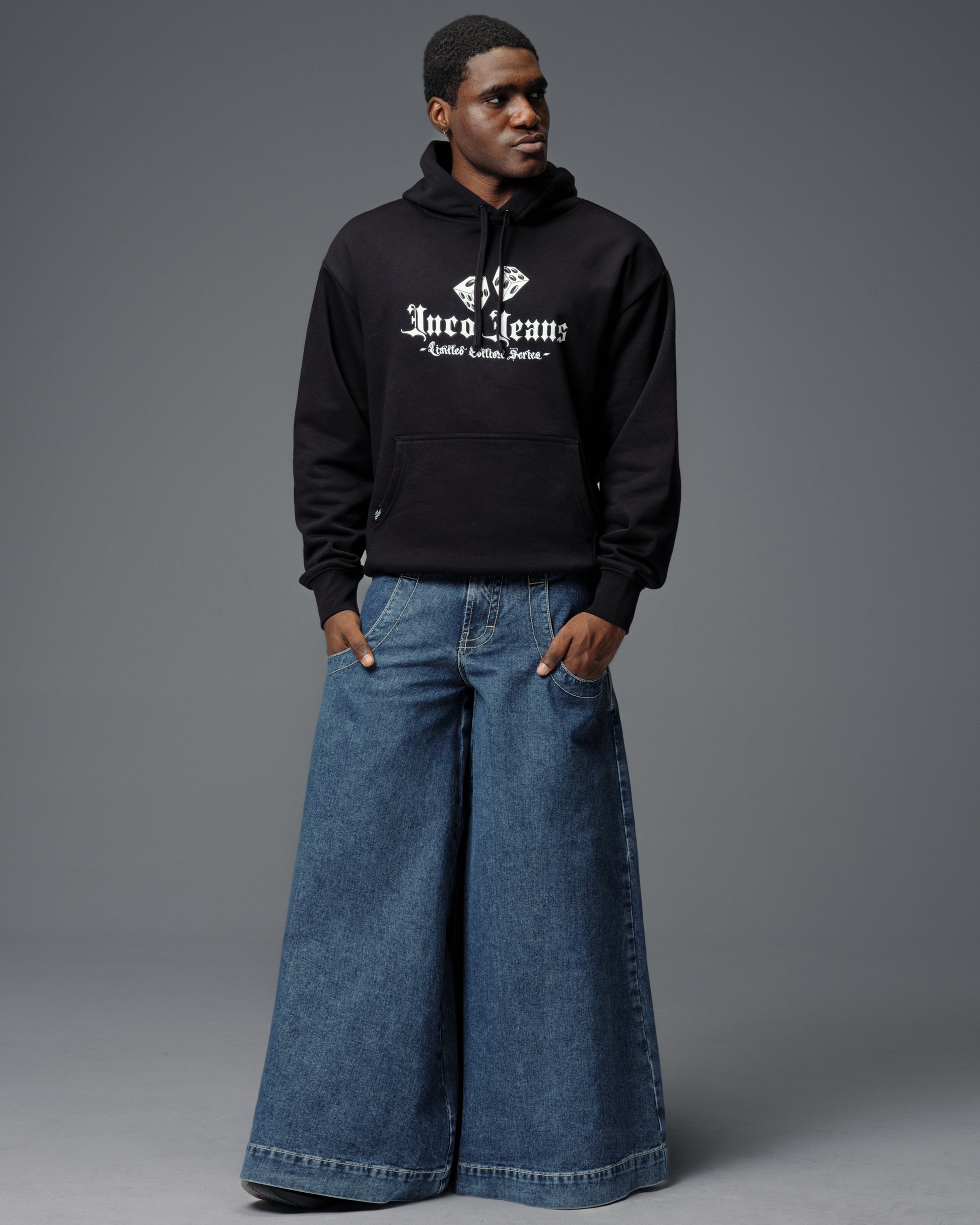
What actually changes as baggy jeans become more expensive?
The price can reflect better denim and construction, but it can also reflect marketing, scarcity or a recognisable label. The useful question is not whether one pair costs more. It is whether that extra cost improves something you will notice when wearing it.
Better-value denim normally improves in three areas: the pattern, the cloth and the build. A well-developed pattern creates room without making the waistband unstable or the seat shapeless. Better denim holds its silhouette more effectively and ages with greater character. Stronger construction improves the parts that take the most wear.
Cut first
The pattern should create deliberate width without relying on an oversized waistband.
Fabric second
The denim should support the shape, recover well and feel appropriate for regular wear.
Branding last
A label only adds value when the fit, fabric or construction offers something meaningful.
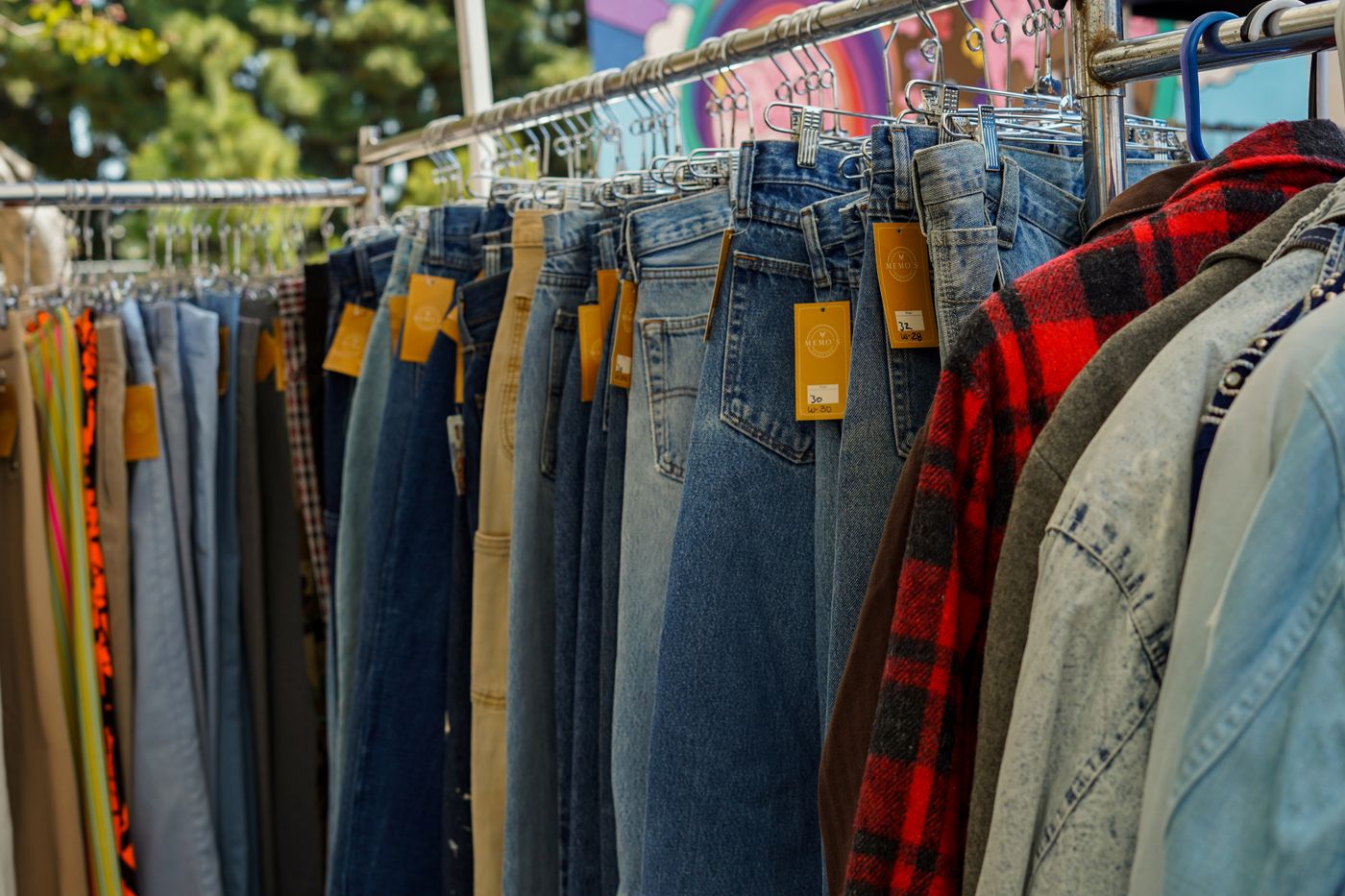

Decide the silhouette first
A budget becomes useful only after you know the shape you are shopping for. Two pairs at the same price can behave completely differently because of their rise, hem width, inseam and denim weight.
Choose where the waistband should sit.
Decide between relaxed, wide or very wide.
Choose a clean break or controlled stacking.
Check that the hem works with shoes you already own.
Our guide to how baggy jeans should fit explains these proportions in more detail. Use it before comparing prices so you do not mistake an oversized waist for a deliberately baggy cut.
What you should expect at each budget
Best for trying the silhouette
This price band is useful for trying a new silhouette, adding a less frequently worn wash or building a wardrobe on a controlled budget. You can find a convincing shape here, but the denim may be lighter and the construction simpler.
- Light to medium-weight denim with a softer feel from the first wear.
- Standard hardware and straightforward internal finishing.
- Trend-led washes and silhouettes.
- Less consistency between colours or production runs.
Affordable denim works best when the design is simple. Look for a clean wide-leg pattern, a dependable waistband and minimal artificial distressing. Stretch is not automatically a problem, but very soft stretch denim can collapse rather than hang cleanly.
The strongest everyday balance
For most people, this is the strongest value band. The denim is usually substantial enough to maintain its silhouette, while the price remains realistic for jeans worn several times each week.
- More dependable denim weight and improved shape retention.
- Better grading between waist sizes.
- Stronger pockets, seams and hardware at common stress points.
- More convincing washes with less need for excessive distressing.
This is where a good cut and useful fabric most often meet. Prioritise jeans that provide clear garment measurements and show the fit from the front, side and back.
Worth it when the difference is tangible
Premium denim can justify its price through specialist fabric, lower-volume production, complex washes or unusually considered pattern cutting. It makes most sense when you already understand the silhouette you wear often.
- Heavier, characterful or specialist denim.
- Greater attention to pocket placement, seams and internal finishing.
- Washes designed to develop further with wear.
- More specific references to workwear, skatewear or archival Y2K shapes.
Pay more when the fabric, fit or construction is meaningfully different—not simply because the jeans are difficult to obtain.
The best-value jeans are the pair whose cut you keep reaching for—not the pair with the most impressive label.
Choose based on what matters most to you
Vintage denim can offer heavier cloth, distinctive fading and proportions that feel genuinely connected to the era inspiring the look. New denim offers more predictable sizing, easier returns and a clearer choice of inseams and waist sizes.
You want character that cannot be replicated exactly
You want natural fading, older fabric character and a one-off finish. Be prepared to judge the garment from exact measurements and inspect wear around the crotch, pockets, knees and hems.
You value consistency and easier sizing
You need predictable sizing, an easy exchange process or several washes built around the same dependable cut.
Neither option is automatically better. A well-selected vintage pair at £45 can outperform generic premium denim, while a thoughtfully cut new pair can be more wearable than vintage jeans bought only because the label is old.
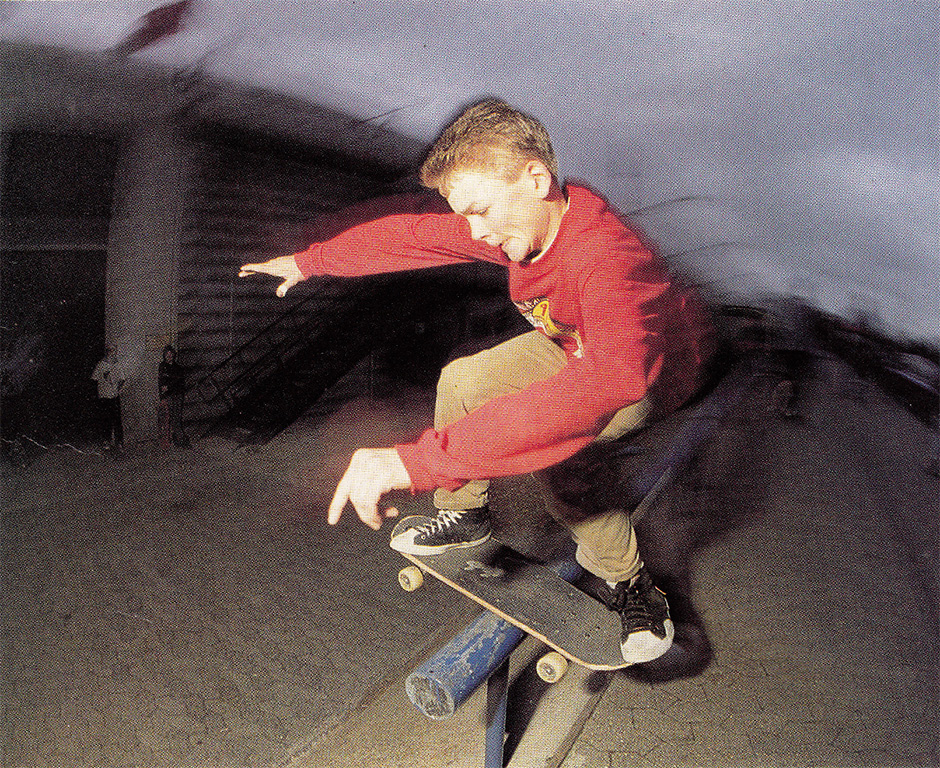
How to tell whether the jeans are worth the price
Quality is easier to judge when you consider how the full garment behaves. Heavy denim is not useful when the pattern is uncomfortable, and decorative stitching adds little when the waistband twists after washing.
The waistband lies flat and appears evenly constructed.
The seat has room without collapsing beneath the body.
The outside seam falls cleanly instead of twisting forwards.
Pocket corners and belt loops are securely reinforced.
The wash looks integrated into the denim.
The hem width and inseam work with your footwear.
Check the composition
One hundred per cent cotton denim tends to hold a stronger structure and develop more individual wear. A small amount of elastane can improve comfort, but very soft stretch denim may not create the same weight or drape through a wide leg.
Compare against a pair you already like
Compare the flat waist, front rise, thigh, inseam and leg opening with jeans you already like. Vintage sizing is particularly inconsistent, but modern sizing also varies between brands.
Look beyond perfect product photographs
A useful listing should show the jeans from more than one angle and explain the model's size or garment measurements. When buying pre-owned denim, close photographs of the crotch, hems, pockets and fastening are more useful than heavily styled campaign images.
Five buying mistakes that usually cost more later
Buying several waist sizes larger
This creates a loose waistband and collapsed seat rather than the controlled width of a true baggy pattern.
Assuming heavier always means better
Heavy denim can feel impressive, but it still needs a wearable rise and enough flexibility for normal movement.
Paying for distressing instead of construction
Rips and heavy fading can increase the price while reducing the useful life of the fabric.
Ignoring the shoes you already own
A very wide, long hem can overwhelm low-profile footwear. Build the denim purchase around your existing wardrobe.
Buying the label before the fit
A recognised brand does not guarantee the right rise, width or inseam for your proportions.
Five measurements that protect your budget
Measure straight across the waistband, then double it.
Measure from the crotch seam to the top of the waistband.
Measure across the leg close to the crotch seam.
Measure from the crotch seam down to the hem.
Measure straight across the bottom of one leg.
Pay more for something you will actually notice
Spending more makes sense when the jeans become a foundation piece: a wash you will wear throughout the year, a cut that works with several tops and shoes, and fabric that can handle regular use.
A £70 pair worn twice each week for two years will usually provide better value than a £30 pair worn three times because the rise feels wrong. Conversely, a well-cut £35 pair that becomes part of your weekly rotation is a better purchase than expensive denim kept for special occasions.
Build the baggy-jeans outfit
Frequently asked questions
How much should I spend on baggy jeans?
For most shoppers, £40–£80 offers the strongest balance of cut, fabric and everyday durability. Spend less while experimenting with the silhouette, or more when specialist fabric or construction adds something you will genuinely notice.
Are expensive baggy jeans always better?
No. Higher prices can reflect better materials and construction, but they can also reflect branding or scarcity. Judge the cut, denim, stitching and hardware rather than relying on price alone.
Is vintage denim better value than new denim?
Vintage denim can offer distinctive fading and older fabric character, while new denim provides more predictable sizing and easier exchanges. The better value is the pair with the strongest fit, condition and usefulness for your wardrobe.
Should baggy jeans be 100% cotton?
One hundred per cent cotton gives a firmer structure and develops character with wear. A small amount of stretch can improve comfort, but very soft stretch denim may create less definition through a wide leg.
Which measurements matter most when buying online?
Compare the flat waist, rise, thigh, inside leg and hem opening with a pair you already own. These measurements reveal far more than the labelled size.
Should I size up to make jeans baggier?
Usually not. Choose jeans designed with a wide leg and room through the seat and thigh. Sizing up ordinary jeans tends to loosen the waist without creating the intended proportions.
Which wash gives the best value?
A versatile mid-blue, washed black or faded indigo is usually easiest to wear repeatedly. More distinctive washes can still offer value when they work with several pieces already in your wardrobe.


