

Buying a vintage jacket is rarely as simple as choosing your usual size. Shoulder width, chest measurement, body length and sleeve length can vary significantly between brands, decades and styles, while years of wear can change everything from the lining and cuffs to the zip and shape of the garment.
The best vintage jacket is not necessarily the oldest, rarest or most recognisable one. It is the piece whose proportions, material and condition still make sense for how you want to wear it. This guide explains what to measure, where to look for wear, which alterations matter and how to judge a vintage jacket before buying. You can browse our current jumpers and jackets collection as you read.
Buy the proportions and condition, not the size on the label.
Start with pit-to-pit, shoulders, body length and sleeves, then inspect the fastening, cuffs, collar, lining, pockets and high-wear seams. Fading, softened fabric and old repairs can add character; damaged zips, failing linings and weakened fabric can turn an otherwise good jacket into an expensive repair.

Forget the brand and decade for thirty seconds. If all you knew was the pit-to-pit, shoulder width, body length, sleeve length, material and condition, would you still want the jacket? If the answer is yes, you are probably judging the piece for the right reasons.
Why vintage jacket sizing can be misleading
A size label is useful information, but it should not be treated as a guaranteed modern fit. Different brands, markets and periods used different proportions, and the intended silhouette of the jacket matters just as much as the letter or number printed inside it.
A work jacket designed with a short, square body can fit completely differently from a longer sports jacket carrying the same labelled size. A bomber may have dropped shoulders and a gathered hem, while a denim jacket may be deliberately compact through the body.
Alterations and wear create another variable. Sleeves may have been shortened, elastic can lose tension and linings can be replaced. When buying vintage online, actual garment measurements and clear photographs are therefore much more useful than relying on the tag alone.
Measure the jacket
Compare actual garment dimensions with a jacket you already like wearing.
Inspect the structure
Fastenings, cuffs, lining, seams and fabric condition matter more than ordinary cosmetic wear.
Judge the silhouette
Shoulder position, body width and length determine whether the jacket creates the shape you actually want.
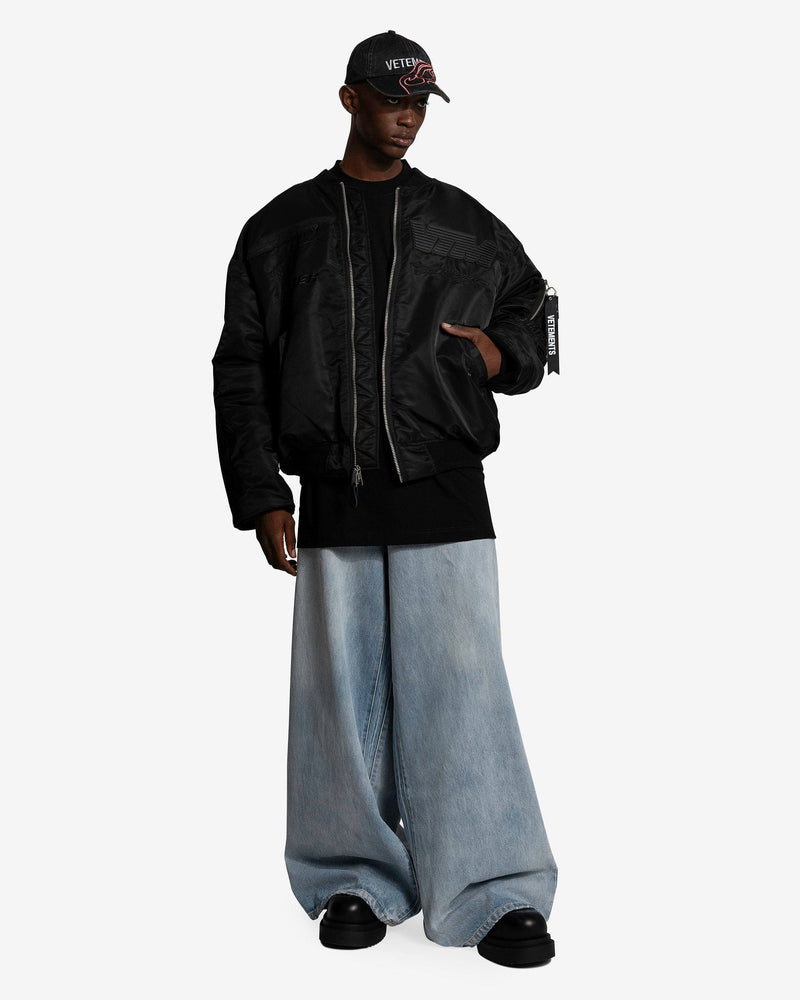
Five measurements that tell you how a vintage jacket will fit
The easiest way to buy a vintage jacket online is to compare it with one you already own. Lay your reference jacket flat, fasten it and take the same measurements shown in the listing.
Measure straight across the chest from one underarm seam to the other.
Measure across the back between the outer shoulder seams where the sleeves begin.
Measure from the highest shoulder point down to the bottom hem.
Measure from the shoulder seam to the end of the cuff.
Measure across the bottom of the jacket to understand how straight or tapered the body will sit.
Do not judge one measurement in isolation. A wide pit-to-pit with a short body creates a very different silhouette from the same chest width on a long jacket. Shoulder construction also matters: dropped-shoulder jackets can appear extremely wide on paper while still sitting naturally when worn.
What should you check in the photographs?
A useful vintage listing should show enough of the jacket to judge both its proportions and its condition. Styled photographs are useful, but they should not replace clear views of the actual garment.
The complete front with the jacket laid flat or hanging straight.
The complete back.
The collar and neckline.
Both cuffs and sleeve ends.
The main zip, buttons or snap fastenings.
The hem and any elasticated waistband.
The lining and inside seams where possible.
Any stains, repairs, holes or areas of heavy wear.
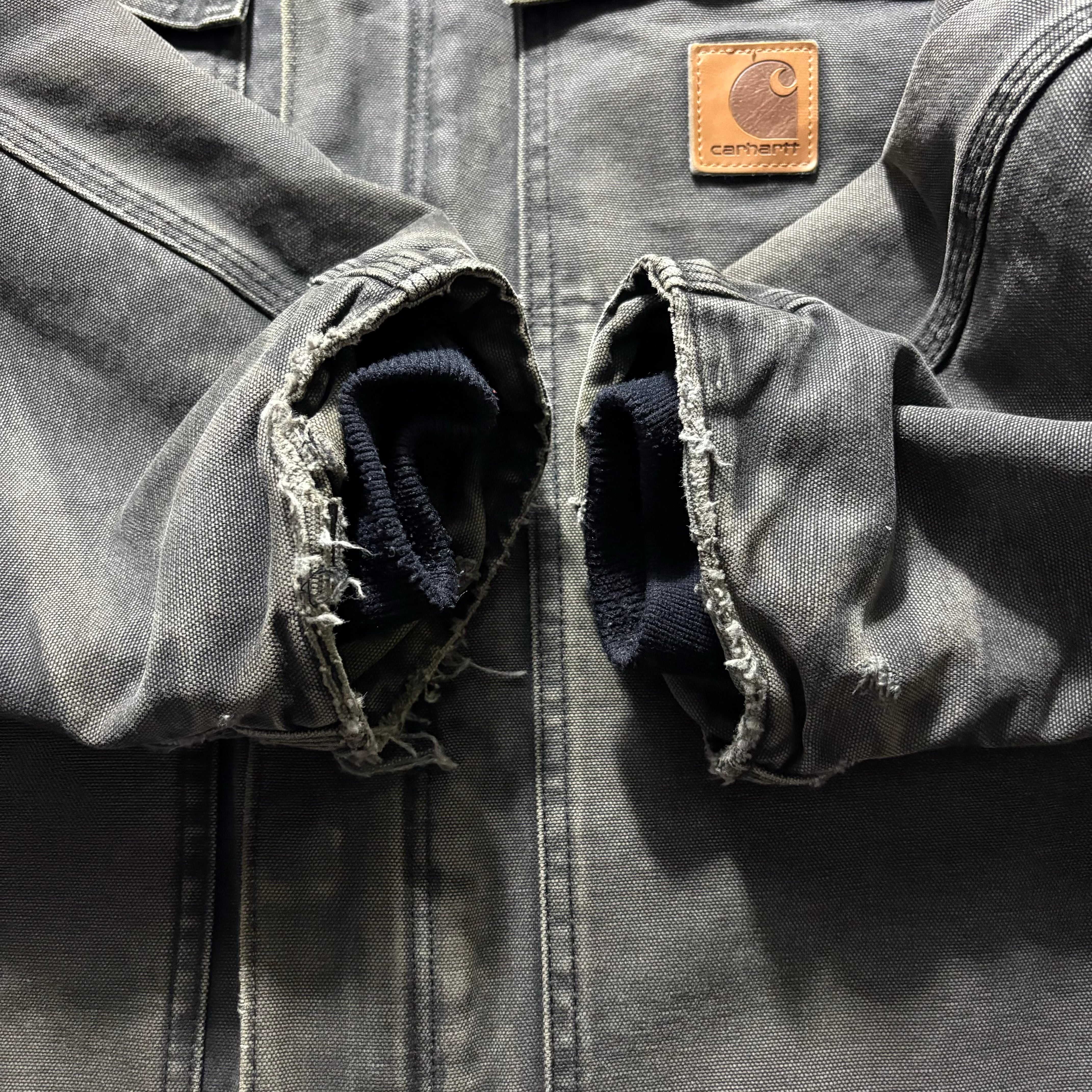
When does wear add character — and when is it damage?
One of the attractions of vintage outerwear is that age can improve its appearance. Washed denim, faded cotton, softened canvas and worn leather can develop a surface that would take years to reproduce naturally.
The important distinction is between cosmetic ageing and structural deterioration. A faded sleeve may have years of wear remaining. Fabric that is thinning around a pocket corner or separating beside a zip is much more likely to require repair.
Natural ageing
Fading, softened fabric, worn edges and light marks can add character when the underlying material remains strong.
Repairs and replacements
Replaced buttons, patched fabric and repaired seams can be perfectly usable. Check the quality of the work and whether it changes the appearance or fit.
Structural damage
Failing zips, torn lining, weakened cuffs, splitting seams and fabric deterioration around stress points can require more substantial work.
Understand what has been repaired or changed
A repaired jacket can still be a good everyday piece. A replaced button, neatly reinforced pocket or professionally fitted zip may extend its useful life. What matters is whether the repair is secure, whether the surrounding material remains strong and whether you like the resulting appearance.
Alterations require a different kind of attention. Shortening the body changes where pockets and fastenings sit in relation to the hem. Taking in the sides can reduce layering room, while shortening sleeves may remove the original cuff detail. The labelled size no longer describes the present cut reliably.
Ask for photographs of the inside as well as the outside of a repair. Uneven stitching, puckered seams or a patch fixed only to fragile fabric deserve a closer look. If substantial work is needed, find out what a repairer would charge before deciding that the asking price is good value.
Shortened sleeves and body
Compare both sleeves and look for changed stitching at the cuffs or hem. A small adjustment can be useful, but lost length is difficult to recover unless there is enough material left inside.
Replacement fastenings
A replacement zip is not automatically a fault. Check that it runs smoothly, sits flat and closes the jacket without pulling the two sides out of alignment.
Relining and patches
A replacement lining should allow comfortable movement through the shoulders and sleeves. Patches should extend into stable material rather than simply cover the visible hole.
What can a jacket label actually tell you?
Labels can identify the maker, original size, fibre content and care instructions. Some also give manufacturing information or a product code. These details help you understand the jacket, but the tag alone does not establish its age or present condition.
A familiar logo may have been used across several periods. Replacement linings can remove original labels, and reproduction jackets can deliberately copy older design details. If a seller claims a particular decade or rare model, ask what evidence supports the description.
Country of manufacture, hardware, pocket layout and construction can contribute to an assessment when considered together. A later replacement zip should be recognised as a repair rather than used to date the whole jacket. Buy the garment on its present merits even when an exact year cannot be established.
Inspect the parts that usually wear first
Zips, buttons and snaps
Open and close every fastening when buying in person. Online, look closely for missing teeth, damaged zip tape, loose buttons and snaps pulling away from the surrounding fabric.
Collars, cuffs and hems
These areas receive repeated contact and often reveal the true amount of wear. Check for fraying, stretched ribbing, weakened folds and fabric beginning to separate.
Lining and internal seams
A clean exterior can hide a heavily worn lining. Inspect the underarms, pocket bags, sleeve lining and areas beside internal seams for tears or deterioration.
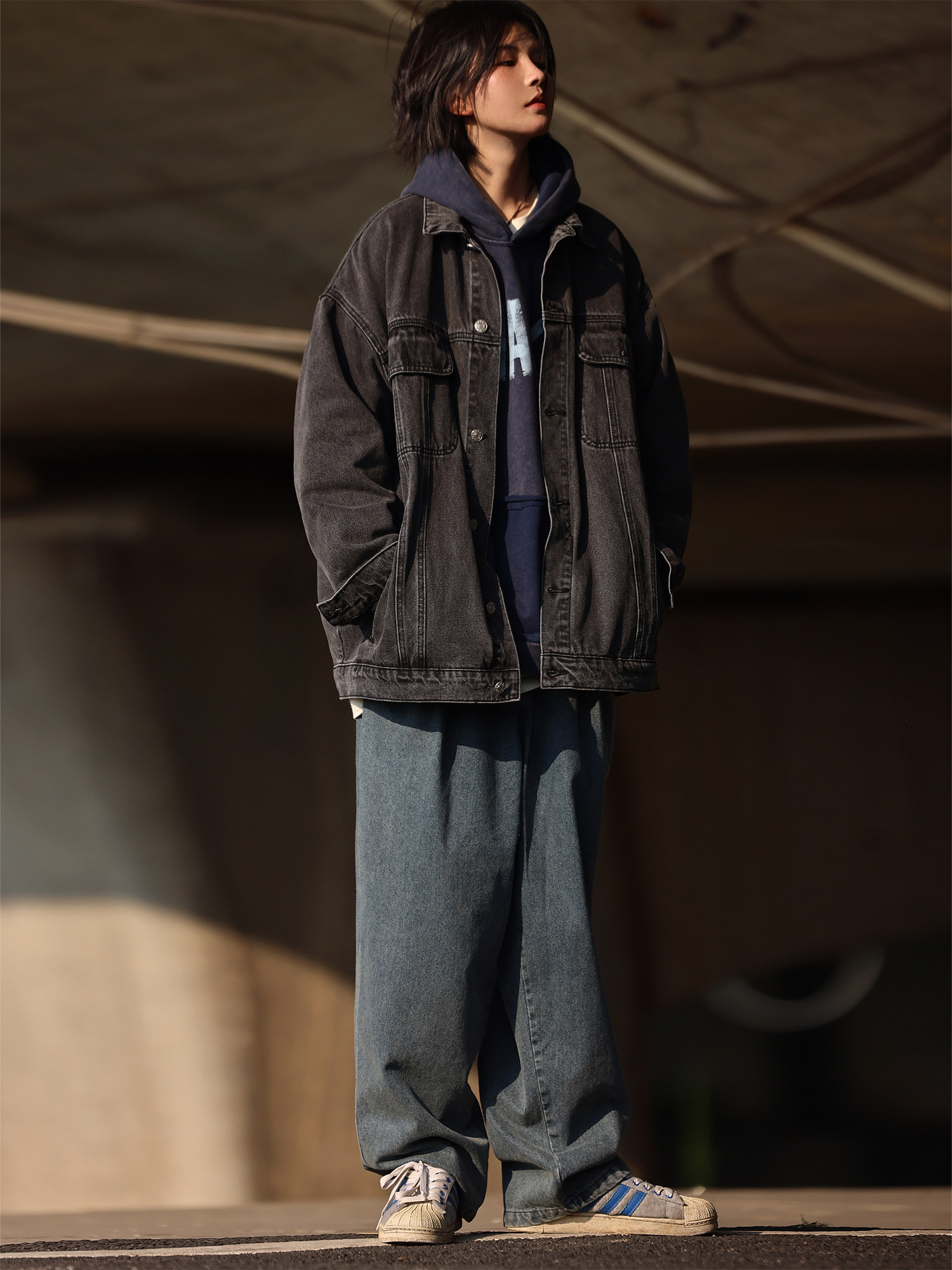
Know what you are buying before judging the fit
Different jackets were designed around different proportions. Comparing every vintage jacket against the same idea of a perfect fit can therefore be misleading.
Often shorter and more structured through the body.
Usually practical, roomy and built around layering and movement.
Often roomy through the body with a shorter elasticated hem.
Can range from lightweight track jackets to oversized technical outerwear.
Judge the material before choosing the jacket
The same measurements can feel different in stiff canvas, soft denim, padded nylon or leather. A heavy shell holds its shape; a softer one falls closer to the body. Thick padding and bulky linings also reduce the usable room inside, so an external chest measurement is only the starting point for judging comfort.
Inspect the material around folds, seams and areas that flex. A worn surface can be appealing while the material remains stable. Splitting leather, brittle fabric or an interior coating that is flaking away changes what the jacket can realistically do for you.
Technical-looking outerwear should not be assumed to perform like a new waterproof jacket. Check the stated condition of coatings and seam tape if weather protection matters. Appearance, warmth and rain resistance are separate buying questions.
Cotton, denim and canvas
Look for thinning at cuffs, pocket corners and the underarms. Compare the worn areas with a less exposed part of the jacket to judge how much material remains.
Leather and suede
Check folds and seams for cracking or tearing. Surface scuffs can be part of the appeal; deep splitting and stiff, fragile areas require a different assessment. Follow the care label and seek specialist advice for substantial cleaning.
Nylon, coatings and padding
Inspect the inside for peeling finishes, loose seam tape and uneven padding. Confirm whether the seller is offering the garment for its style or claiming a particular level of weather protection.
Buy the jacket that has aged well, not simply the jacket that has aged.
When should you walk away?
The seller will not provide measurements
Vintage jacket sizing varies too much to rely confidently on the label alone.
The zip is already failing
A damaged main fastening can turn an apparently inexpensive jacket into a repair project.
The fabric is weak around stress points
Look carefully around pockets, underarms, cuffs, seams and fastenings where deterioration can spread.
The photographs hide the interior
A worn or damaged lining can be easy to conceal when a listing only shows the exterior.
You are buying the label instead of the jacket
A desirable brand or old tag cannot compensate for proportions, condition or materials that do not work for you.
Compare jackets with jackets
Choose a jacket in your wardrobe that already creates the silhouette you want. Fasten it, lay it flat and record its pit-to-pit, shoulders, body length, sleeve length and hem width.
Those numbers give you a practical reference. A vintage jacket that is two inches shorter but similarly wide will feel boxier. A wider shoulder measurement can create a dropped silhouette, while a narrower hem may make the body appear more cropped or rounded.
Start with a jacket you already wear
A familiar garment gives you a much better reference than trying to predict fit from a vintage size label. Compare the measurements first, then decide whether the different cut is intentional.
What questions should you ask an online seller?
Ask for anything the listing does not already establish. Measurements are most useful when you know where they were taken and whether the jacket was fastened. For a raglan sleeve, agree on a neck-to-cuff or underarm-to-cuff method rather than comparing it with a shoulder-seam measurement.
Ask about faults that photographs cannot explain clearly, including persistent odours, stiff fastenings or interior deterioration. A photograph can show a zip but cannot demonstrate that it closes properly. Include the likely cost of repairs and the room you need for your usual layers in your decision.
The actual pit-to-pit, body length and hem width, with the jacket fastened.
Shoulder and sleeve measurements, including the measuring method.
Whether cuffs or the body have been shortened or narrowed.
Whether the main zip, buttons and snaps all work.
Clear photographs of the lining, underarms and pocket bags.
Whether repairs or replacement parts are present.
Whether elastic or ribbing still has useful tension.
Whether there are persistent odours, stains or material weakness.
What the care label says and whether any specialist cleaning is likely to be needed.
Vintage or vintage-inspired?
Choose according to how you plan to use the jacket. Genuine vintage can offer distinctive fading, older proportions and evidence of a previous life. A newer piece can give you a similar silhouette with more predictable condition and clearer specifications.
An old work jacket that looks right for everyday layering may be an excellent choice. If you need reliable rain protection, a particular insulation level or a consistently available size, compare those requirements directly with the listing rather than assuming that age or branding answers them.
You value the existing character
You like the actual wash, material, hardware and proportions, and you are comfortable with the disclosed wear. The jacket earns its place through the piece it is today.
You need predictable function
A clear performance specification, repeatable sizing or a particular finish matters more than natural ageing. Check those details rather than judging by styling alone.
Your vintage-jacket buying checklist
Chest width works with the layers you intend to wear.
Shoulder construction suits the silhouette you want.
Body length sits where you want it to finish.
Sleeve length was measured in a comparable way.
Hem width and elastic allow comfortable movement.
Every fastening is present and functional.
Collar, cuffs, pockets and high-wear seams are stable.
You have inspected the lining and material inside.
Repairs, alterations and cleaning needs are understood.
The measurements compare sensibly with a jacket you already wear.
Build around the outerwear
Frequently asked questions
Should you size up when buying a vintage jacket?
Compare actual measurements first. Choose enough room for your intended layers rather than automatically moving up a labelled size. Padding, lining and the cut can all affect how much usable space there is inside.
What is the most useful vintage-jacket measurement?
Pit-to-pit is a useful starting point, but shoulders, body length, sleeves and hem determine the overall silhouette. Compare all five with a jacket you already enjoy wearing.
How do you measure raglan sleeves?
A raglan jacket has no conventional shoulder seam at the top of the arm. Ask whether the seller measured from the neck to the cuff or from the underarm to the cuff, then use the same method on your reference jacket.
Are repaired vintage jackets worth buying?
They can be, when the work is stable and you like the result. Inspect the surrounding material, consider comfort and include the cost of any unfinished repair in your decision.
Can a vintage jacket zip be replaced?
Often, but feasibility and cost depend on the construction and damage around it. A repairer can assess whether the zip alone needs replacing or whether the surrounding fabric also requires work.
How can you tell if a jacket has been altered?
Look for different thread, changed seam lines, uneven sleeve lengths and unusual cuff or hem finishes. Ask the seller directly; photographs alone may not establish every alteration.
Does a faded jacket mean the fabric is weak?
No. Colour loss can be cosmetic. Inspect the fabric itself, especially at cuffs, pocket corners, underarms and beside fastenings, for thinning or separation.
Are vintage technical jackets still waterproof?
Do not assume so. Coatings, seam tape and finishes can deteriorate. Ask what condition or performance the seller can confirm if rain protection is part of your reason for buying.
Can you buy vintage jackets online confidently?
Clear measurements, detailed exterior and interior photographs and specific answers about faults make the decision easier. Resolve missing information before relying on the size label or a styled photograph.


