

Buying vintage jeans is different from buying a new pair. The size on the label may no longer match the actual waistband, the denim may have changed through years of washing and wear, and alterations that are almost invisible in photographs can completely change the way the jeans fit.
The best vintage denim is not necessarily the oldest, rarest or most expensive pair. It is the pair whose measurements, shape, fabric and condition still make sense for how you want to wear it. This guide explains what to check before buying, whether you are searching through a vintage rail in person or comparing photographs online. You can browse our current relaxed denim in Baggy Bliss as you read.
Measure the jeans, not the label.
Ignore the labelled waist size until you have checked the actual measurements. Start with the waistband, rise, thigh, inside leg and hem opening, then inspect the crotch, hems, pockets and waistband for damage or alterations. Natural fading and old repairs can add character; weakened fabric, badly shortened legs and structural damage are much harder to live with.
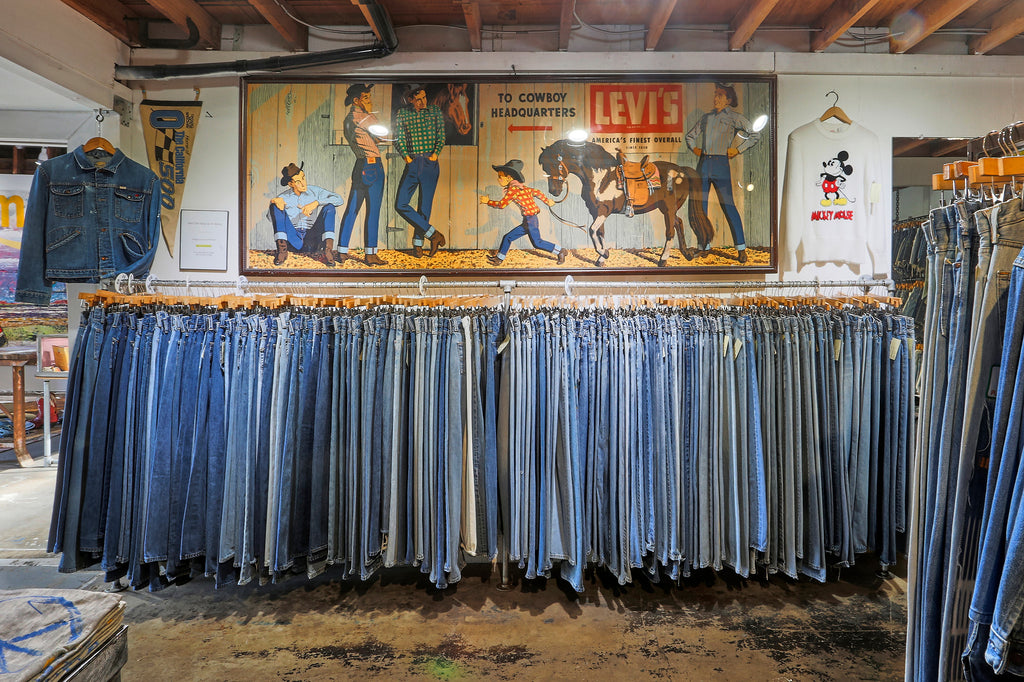
Forget the brand and size for thirty seconds. Would you still buy the jeans if all you knew was the actual waist, rise, thigh, leg width, length and condition? If the answer is yes, you are probably judging the pair for the right reasons.
Why vintage jean sizing is unreliable
A vintage size label should be treated as historical information rather than a guaranteed body measurement. Jeans from different decades were cut differently, brands used different sizing systems and years of washing can change the dimensions of the fabric.
Levi's own SecondHand guidance makes the same point: vintage sizing can vary considerably by era, and the company recommends checking the actual waist and inseam rather than relying on the size printed on the tag.
Alterations add another variable. A pair marked W34 may have had the waist taken in. An originally long pair may have been hemmed. A straight leg may have been tapered. None of those changes are necessarily bad, but they make the original size label less useful.
Measure the garment
Actual measurements matter more than the size printed on the patch.
Judge structural condition
Fading is cosmetic. Weak fabric around the crotch, waistband or seams can become a real problem.
Look for irreversible changes
Shortened legs and aggressive tapering matter more than ordinary wear because they permanently alter the silhouette.
Five numbers that tell you how the jeans will actually fit
If you are buying online, these measurements should come before almost everything else. Compare them with a pair of jeans you already own and like rather than comparing them only with your body.
Lay the waistband flat, measure straight across and double the number.
Measure from the crotch seam to the top of the front waistband.
Measure across the leg just below the crotch seam to understand upper-leg room.
Measure from the crotch seam to the hem along the inside seam.
Measure straight across the bottom of one leg to understand how wide the silhouette finishes.
Rise and thigh are particularly important when you are looking for relaxed or baggy vintage denim. Two pairs can share exactly the same waist measurement while fitting completely differently through the seat and leg.
If you want more detail on how those dimensions should behave once the jeans are on your body, read our guide to how baggy jeans should fit.
What should you check in the photographs?
Good vintage listings should allow you to inspect more than the front of the jeans. You need enough information to understand the shape and enough close-up detail to judge wear.
The full front of the jeans laid flat.
The full back.
The waistband and size or brand patch.
The crotch area.
Both hems.
Back pockets and pocket corners.
Any repairs, holes, stains or heavy fading.
Inside labels where they are relevant to the description.
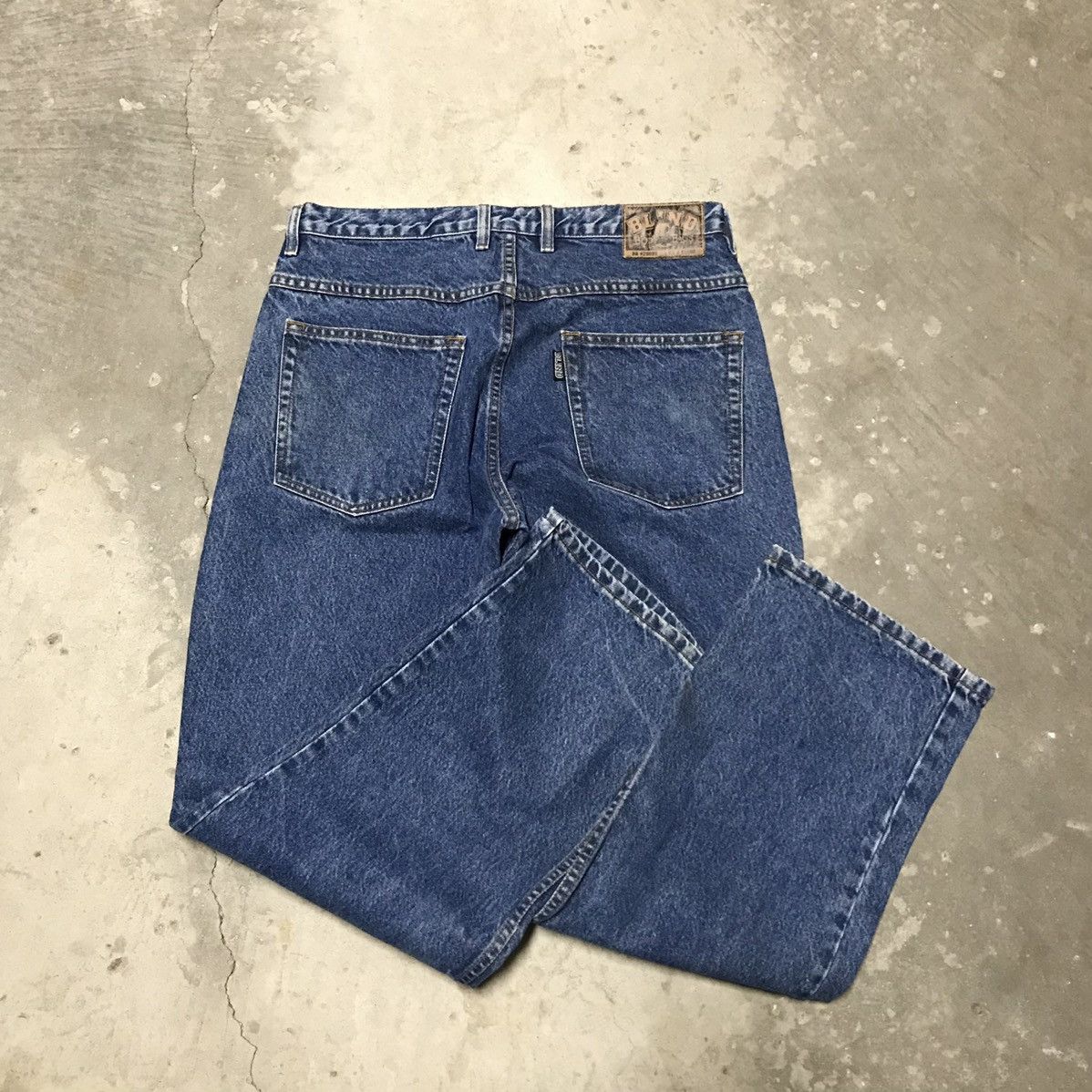
How much wear is acceptable?
Wear is one of the reasons vintage denim is appealing. Fades, softened fabric, worn pocket edges and old repairs can give a pair character that new jeans cannot replicate immediately.
The important distinction is between surface wear and structural weakness. A faded knee may have years of life left. Thin denim directly beneath the crotch seam can fail much sooner because that part of the garment is repeatedly placed under tension.
Natural fading
Whiskering, faded thighs, softened knees and lighter pocket edges are normal signs of denim being worn. They alter appearance far more than function.
Old repairs
A good repair can make vintage denim stronger and add character. Check whether the surrounding fabric is still stable and whether the repair restricts movement or changes the shape.
Structural weakness
Very thin crotch fabric, damaged waistbands, failing buttonholes, broken zips or separating seams deserve much more caution than ordinary cosmetic wear.
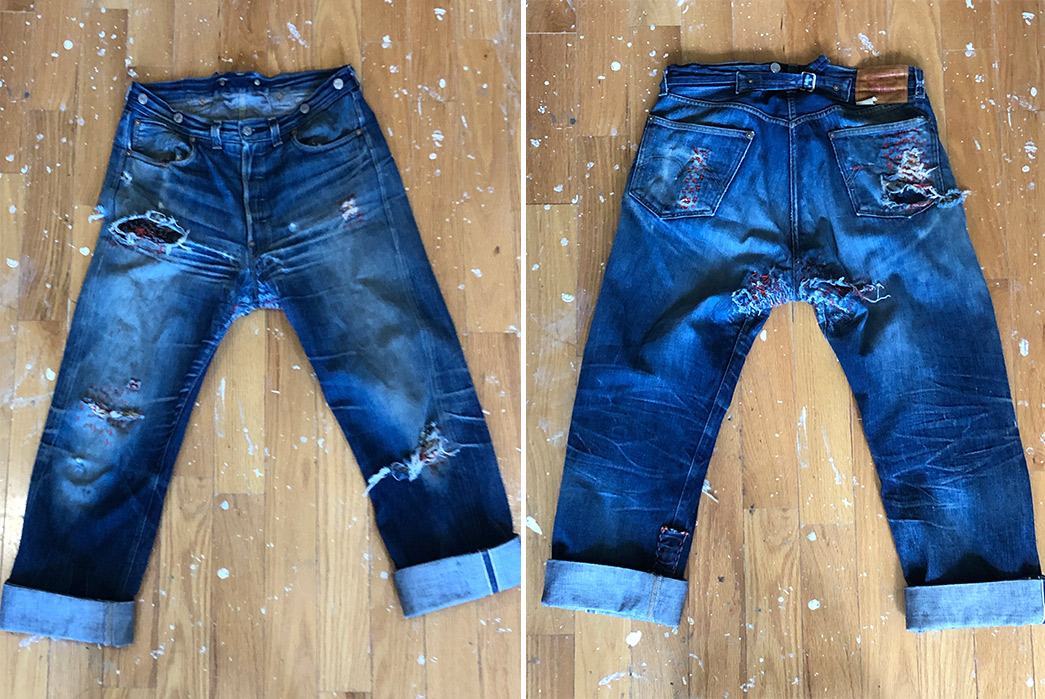
Repairs are not automatically a problem
A repaired pair can be more interesting than an untouched one. The question is whether the repair is stable and whether you like how it changes the garment.
Look for stitching that extends beyond the weak area into stronger denim. A patch placed only over the visible hole can leave the surrounding worn fabric ready to tear again.
Also consider bulk. Several layers of repair fabric around the knee are normally easy to live with. Heavy reinforcement through the crotch or seat can noticeably change comfort and movement.
Check whether the legs have been shortened
Compare the inside-leg measurement with the overall proportions. Look closely at the hem stitching and ask the seller if the original hem has been retained when that matters to you.
Look for tapering
An altered side or inside seam can turn an originally straight or wide pair into a much narrower silhouette. Compare thigh and hem measurements rather than trusting the original model name.
Inspect the waistband
Small darts or reopened stitching around the rear waistband can indicate that the waist has previously been taken in or let out.
What can the label actually tell you?
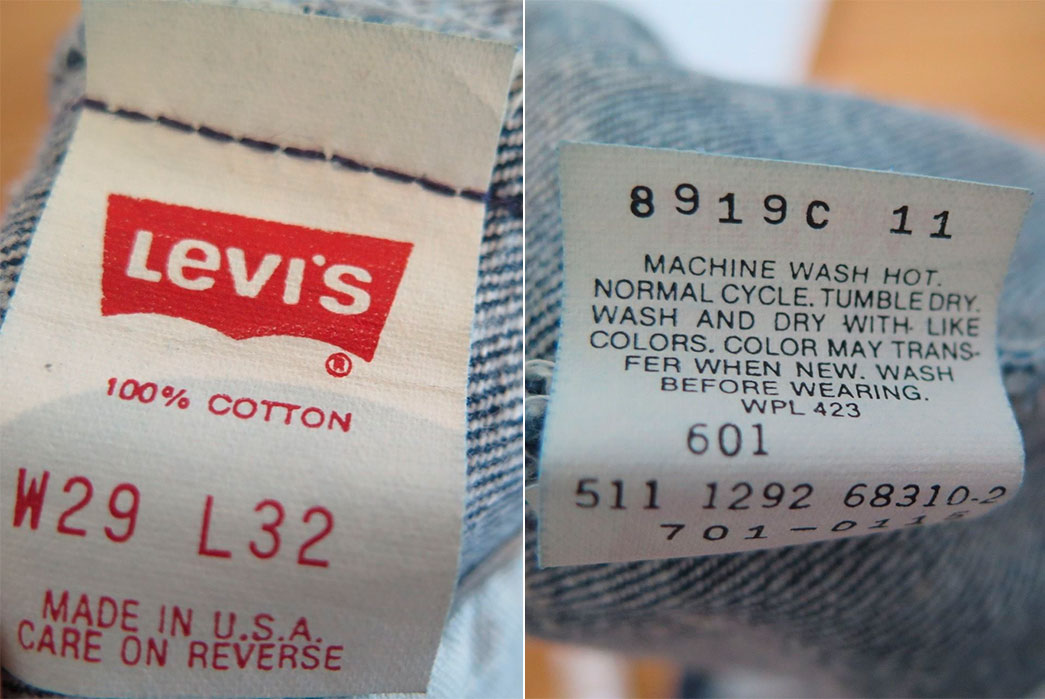
Labels can help confirm the model, fibre content, manufacturing information and original labelled size. With certain brands they can also provide clues about period and construction.
But the label should support the assessment rather than replace it. A desirable tag does not make a badly fitting or heavily compromised pair a good purchase.
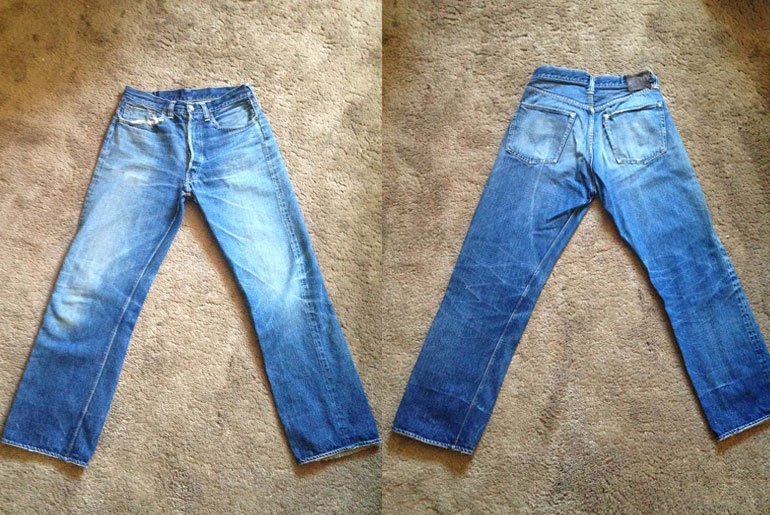
Does selvedge automatically mean better?
No. Selvedge describes how the edge of the denim fabric is woven and finished; it does not guarantee that the cut suits you, that the jeans are genuinely old or that their present condition is good.
It can be an interesting construction detail and is strongly associated with traditional shuttle-loom denim, but it should be treated as one characteristic among many rather than a quality stamp that overrides fit and condition.
This matters particularly when shopping vintage because desirable terminology can distract from a pair that simply does not work for you.
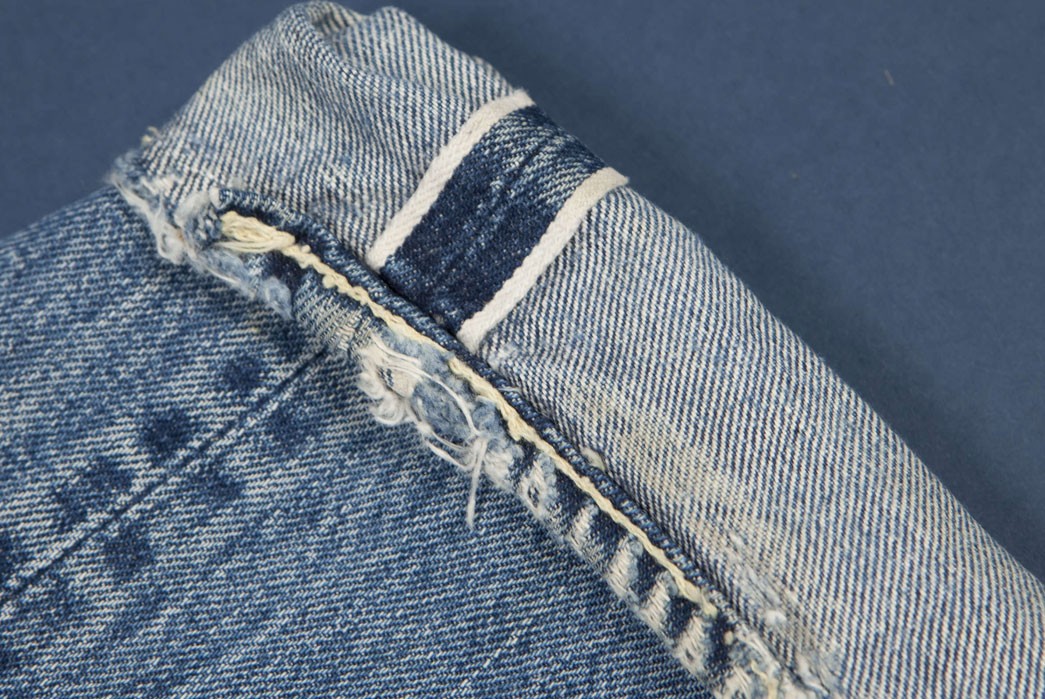
How should you judge the denim itself?
Handle the fabric when buying in person. Heavy denim generally holds a stronger shape, while a well-worn pair may feel dramatically softer after years of wear and washing.
Look for consistency. Faded denim is normal. Denim that feels noticeably thinner around one high-stress area deserves closer inspection.
Most genuinely older jeans will not contain the stretch fibres common in many modern pairs, so there is less forgiveness when the thigh, rise or waistband measurement is marginal.
Natural wear can add character
Good wear normally follows the movement of the person who owned the jeans before you. Fading around the thighs, knees, pockets and creases can make the denim feel unique without compromising the structure.
Wear does not have to look perfect
Old paint marks, repaired knees, wallet fades and softened hems can also become part of the appeal. Whether those details are desirable is personal; what matters is knowing they are there before you buy.
Buy the wear you like, not the age you think you are supposed to value.
When should you walk away?
The seller will not provide measurements
Vintage sizing is too inconsistent to justify guessing purely from the label.
The crotch fabric is extremely thin
Structural wear in a high-tension area is more important than ordinary fading elsewhere.
The inside leg is already too short
You can shorten denim later. Restoring meaningful lost length is far more difficult.
The photos hide important areas
Missing hem, crotch or rear photographs make it harder to judge alterations and damage confidently.
You are buying the label instead of the jeans
Rarity and branding mean little if the silhouette, condition and measurements do not work for you.
How to compare a vintage pair with jeans you already own
Choose the jeans in your wardrobe that fit closest to the result you want. Lay them flat and take the same five measurements: waist, rise, thigh, inside leg and hem.
You now have a reference garment rather than an abstract body measurement. If a vintage pair has the same waist but a two-inch wider hem, you know it will create a visibly wider lower leg. If the rise is longer, you know the seat and waistband will sit differently even before trying them on.
Compare jeans with jeans
A pair you already enjoy wearing is usually the clearest reference for predicting how an unfamiliar vintage pair will fit.
What questions should you ask an online seller?
Before buying, ask for anything the listing does not already confirm.
Actual laid-flat waist measurement.
Front rise.
Thigh width.
Inside leg.
Hem opening.
Whether the legs have been shortened or tapered.
Whether there are repairs not obvious in the photographs.
Whether the crotch or inner thighs are thinning.
Whether the zip, buttons and belt loops are fully functional.
Vintage or vintage-inspired?
Neither option is automatically better. Genuine vintage gives you natural wear, period construction and one-off variation. Modern vintage-inspired denim gives you predictable sizing, easier replacement and the opportunity to choose the exact silhouette from the beginning.
You want genuine ageing and one-off character
You value unique washes, genuine ageing, older cuts and the possibility of finding something that cannot be reproduced exactly.
You want predictable sizing
You want predictable measurements, easier sizing and a specific wide or relaxed silhouette without accepting the condition variables of an older garment.
Explore Baggy BlissYour vintage-jeans buying checklist
You know the actual waist measurement.
You have checked the rise, thigh, inside leg and hem opening.
You know whether the jeans have been shortened or tapered.
The crotch and inner thighs remain structurally sound.
Any repairs are clearly shown and stable.
The zip or button fly works properly.
The waistband, belt loops and pocket corners are secure.
You have seen the front, back, hems and important close-ups.
You like the actual wash and wear rather than simply the brand or age.
The measurements compare sensibly with a pair you already own.
Build around the denim
Frequently asked questions
Should you size up when buying vintage jeans?
Do not choose purely by the labelled size. Compare the actual waistband, rise, thigh and inside-leg measurements with jeans you already own. Older denim can measure differently from both its label and modern sizing.
Why do vintage jeans measure smaller than the tag?
Washing, shrinkage, different historical sizing systems and previous alterations can all make the present-day dimensions different from the original labelled size.
Are repaired vintage jeans worth buying?
Yes, when the repair is secure and you like how it looks. Check that the surrounding fabric is still strong and that bulky reinforcement does not affect comfort or movement.
What is the most important vintage-jeans measurement?
The waist is the starting point, but it should never be considered alone. Rise, thigh, inside leg and hem opening determine how the silhouette actually behaves.
How can I tell if vintage jeans have been hemmed?
Inspect the hem stitching, compare the inside-leg measurement with the expected proportions and ask the seller directly. Altered hems may use different thread or lack the original worn edge.
Is crotch wear on vintage jeans normal?
Some wear is normal, but very thin fabric around the crotch and inner thighs deserves caution because those areas experience repeated tension and may require repair.
Are vintage Levi's sizes the same as modern Levi's?
Not necessarily. Levi's own SecondHand guidance notes that sizing can vary by decade and recommends using actual garment measurements when buying older jeans.
Is selvedge denim always vintage?
No. Selvedge denim is still produced today. The selvedge edge describes how the fabric was woven and finished; it does not prove the age of the garment.
Should I buy vintage jeans online?
Yes, provided the listing gives enough measurements and condition photographs. Ask for anything missing before buying rather than trying to estimate from the size label.


