

Baggy jeans should feel relaxed by design—not like a regular pair bought several sizes too large. The right fit stays secure at the waist, gives you genuine room through the seat and thigh, and falls over your footwear with enough weight to create shape without dragging.
This guide breaks the fit down from waistband to hem, explains the measurements that matter most, and shows how to balance a wider silhouette with the rest of your outfit. To compare the shapes as you read, explore the Baggy Bliss collection.
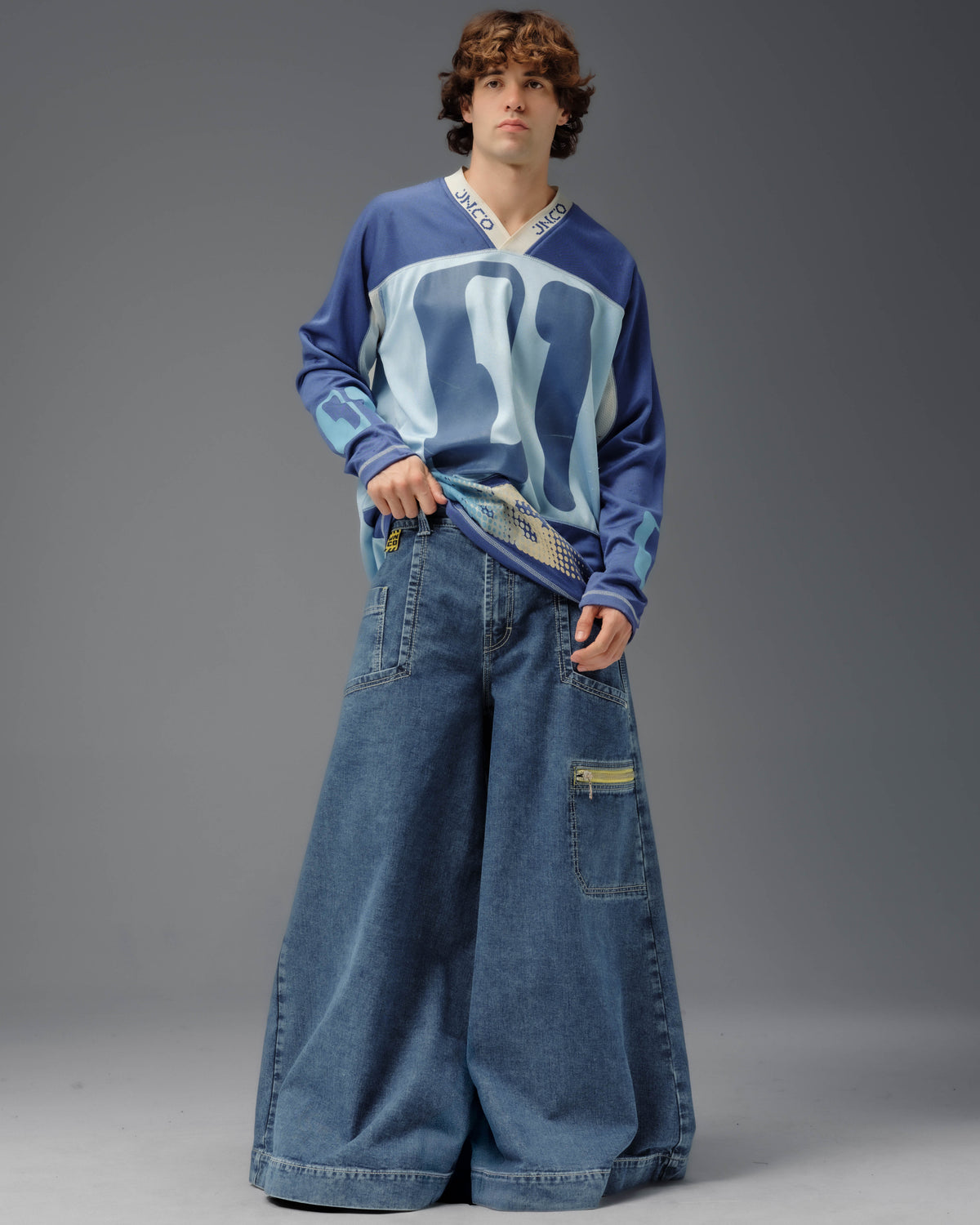
The Dikdik Test
Stand naturally, walk several steps, sit down and crouch. If the waistband stays in place and the thigh never pulls, the foundation of the fit is right.
What actually makes jeans baggy?
Baggy jeans are cut with additional room through the hips, thighs, knees and lower leg. That volume creates the loose silhouette associated with 1990s skatewear, vintage workwear and early-2000s street style.
The important word is cut. A properly designed baggy jean is shaped to look oversized while still fitting where it matters. The waistband and rise hold the upper half in place; the seat and thigh create movement; the wider leg supplies the visual weight.
Buying ordinary jeans two or three sizes larger rarely gives the same result. The waistband becomes unstable, the seat drops awkwardly and the fabric gathers in places where the pattern was never intended to sit.
The waistband stays in place without excessive tightening.
The seat and thigh move freely without losing all structure.
The jeans meet the shoe without dragging beneath the heel.
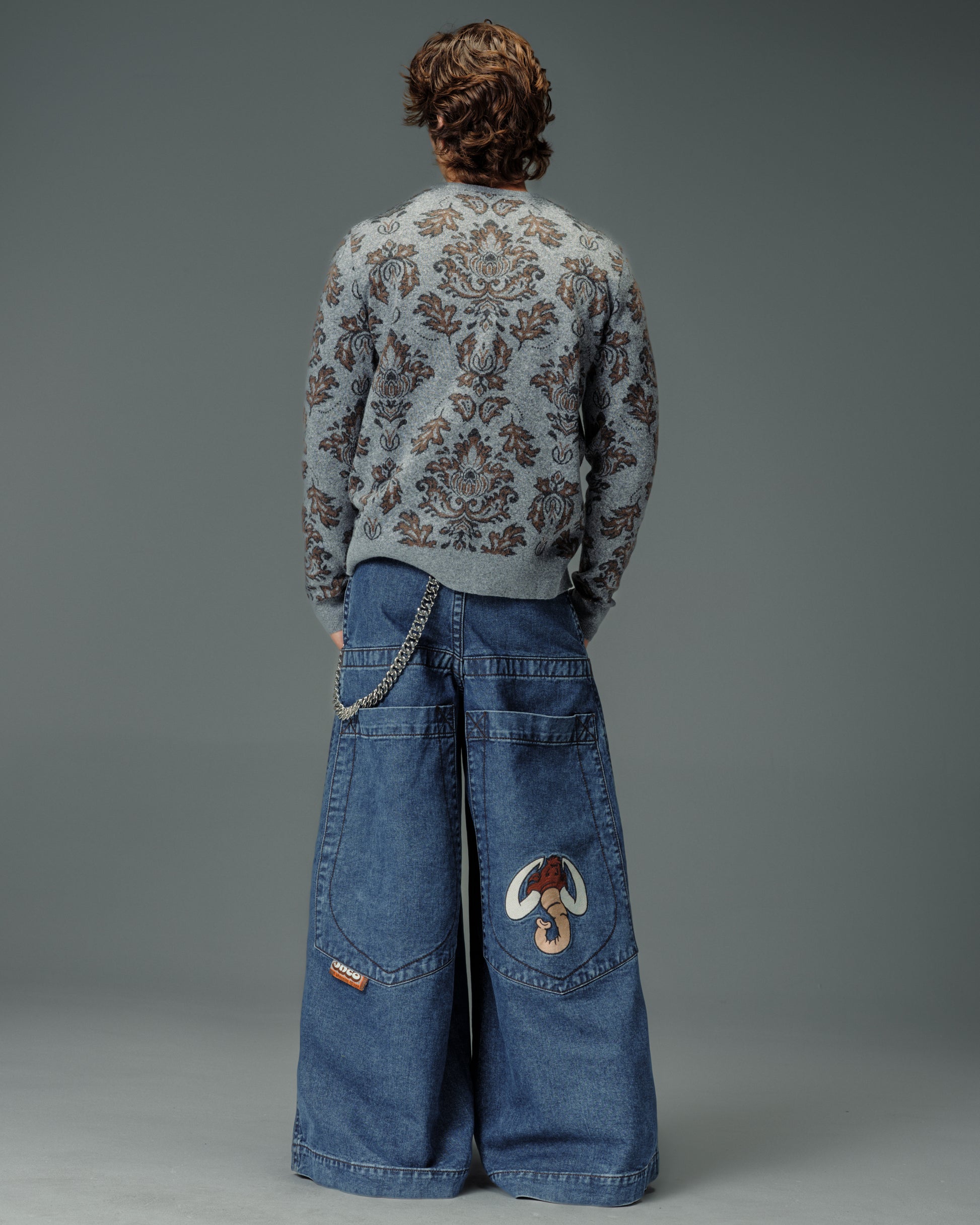
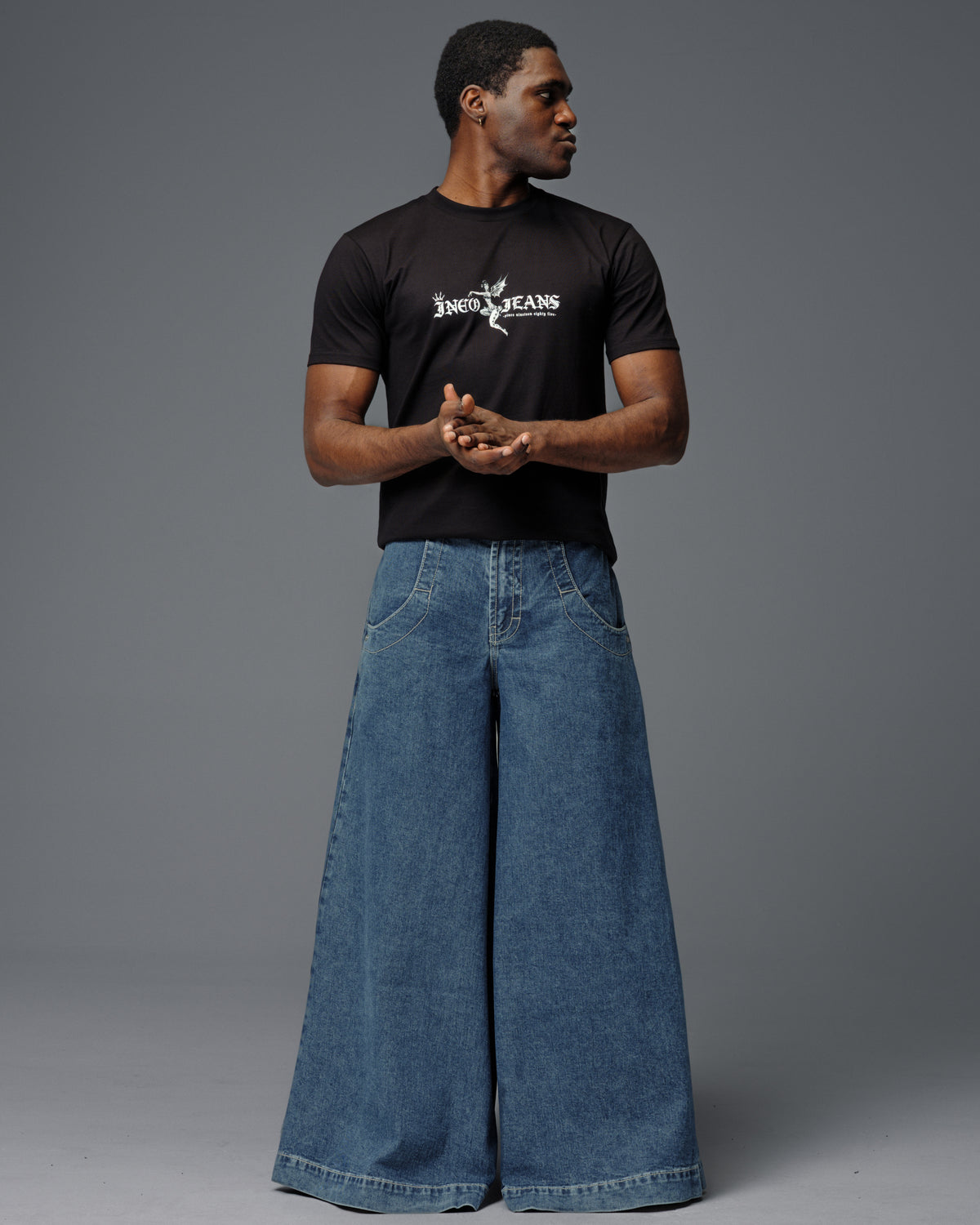
How should baggy jeans fit at the waist?
The waistband should feel secure without digging in. You should be able to sit, bend and move comfortably, but the jeans should not slide down whenever you walk.
Depending on the cut, they can sit at your natural waist, slightly below it or across the upper hips for a lower-rise look. The correct position is the one the rise was designed to support.
The waistband is right when:
- It stays in place during normal movement.
- You can sit without pressure across your stomach or hips.
- A belt makes a small adjustment rather than rescuing the fit.
A belt can add structure and finish the outfit, but it should not be the only thing preventing the jeans from falling. If the waistband needs to be pulled in dramatically, the waist size is probably too large.
Should you size up?
Usually, no. When a product is already described as baggy, loose or wide leg, start with your normal waist size. The volume should already be built into the pattern.
Sizing up by one waist size can work when you deliberately want a lower, slouchier fit, but it also changes the rise and seat. Check the garment measurements rather than relying only on the size label—especially with vintage denim, where sizing can vary between brands and eras.
How should they fit through the seat and thigh?
The seat should look relaxed but not collapsed. There should be enough room to move without fabric pulling across the hips, but not so much excess that the back of the jeans hangs without any shape.
Through the thigh, the fabric should fall away from the body rather than gripping it. You should be able to take a full stride, sit and crouch without restriction.
Look at the jeans from the side. The line from the hip to the knee should feel easy and continuous. If the fabric stretches across the upper thigh, the cut is not truly baggy. If the seat hangs extremely low and folds heavily beneath you, the rise or overall size may be too large.
The best baggy jeans create volume without losing control.
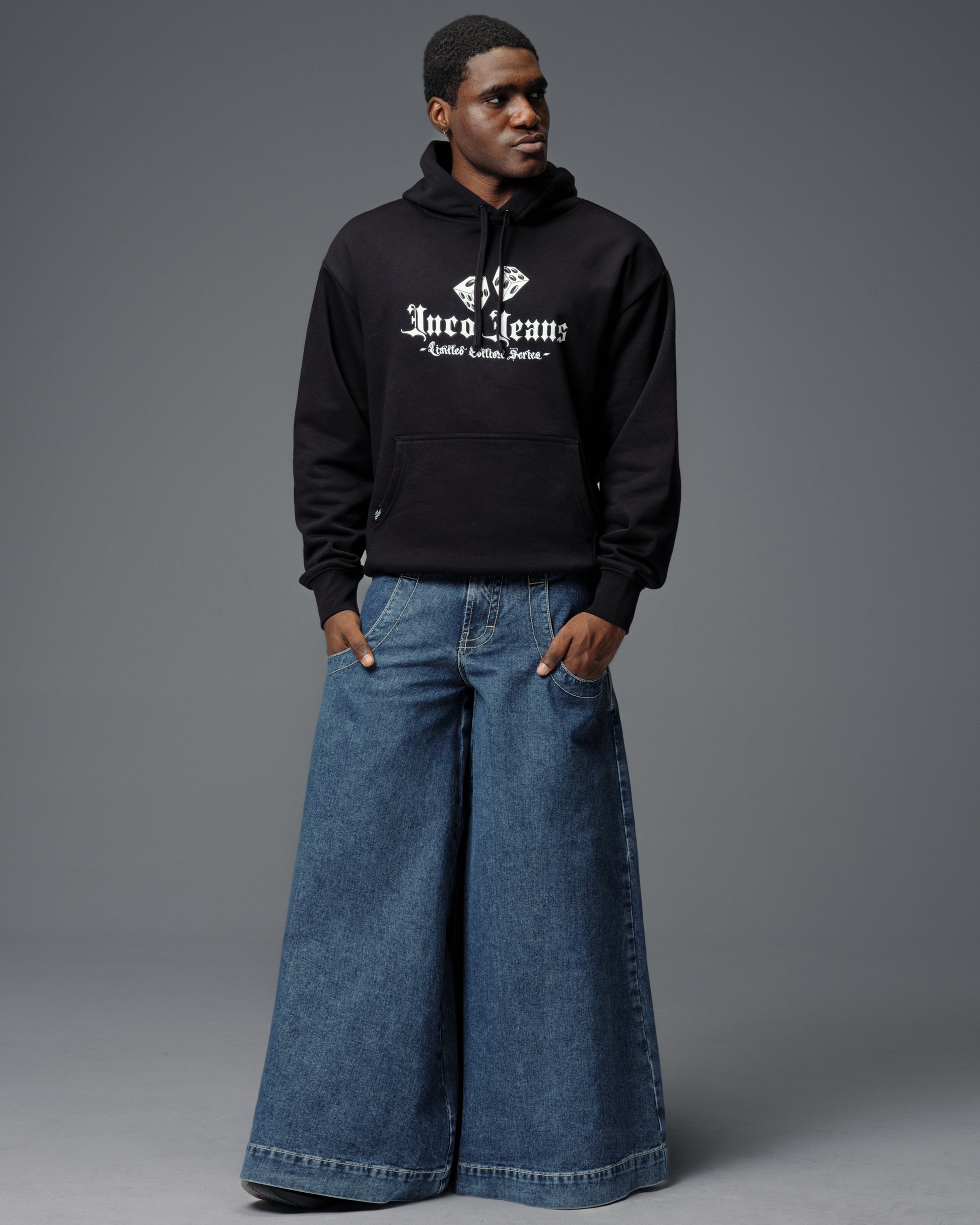
How wide should the leg be?
There is no single correct leg width. Baggy jeans range from relaxed straight-leg cuts to dramatic skate-inspired shapes. What matters is that the width feels consistent from the thigh to the hem.
A classic baggy silhouette usually has a loose thigh, a relaxed knee and a generous hem opening. It should not suddenly narrow below the knee unless the style is intentionally tapered.
Your build and footwear also change how the width appears. A moderately wide leg may look dramatic on a smaller frame, while a very wide hem often feels more balanced with chunkier trainers or skate shoes from the shoes collection.
How long should baggy jeans be?
Length is where a deliberate outfit can quickly start to look untidy. Baggy jeans normally need more length than slim jeans because part of their shape comes from the way the fabric meets the shoe.
The hem finishes above the shoe and interrupts the wide-leg line.
The hem rests on the shoe and creates one or two controlled folds.
The fabric traps beneath the heel and stacks heavily up the lower leg.
A little stacking is part of the look. Heavy bunching from the ankle to the calf normally means the inseam is too long. Continually stepping on the hem will also damage the denim and make an otherwise good pair look worn out quickly.
Prefer a cleaner finish?
Choose an inseam that creates one soft break over the shoe rather than several folds. You will keep the wide silhouette, but the outfit will feel neater and more considered.
The three signs that the fit is right
Use these checks while trying the jeans on. Each one tests a different part of the silhouette.
01 The waistband stays in place
You can wear a belt, but you do not need to tighten it excessively. The jeans remain comfortable when sitting and do not fall during normal movement.
Explore belts for small fit adjustments02 The leg has space without losing shape
There is visible room through the thigh and lower leg, but the denim still hangs cleanly rather than collapsing into random folds.
Compare different baggy silhouettes03 The hem works with your shoes
The jeans meet your footwear naturally, create a controlled break and stay clear of the ground through normal movement.
Find footwear with enough visual weightCommon baggy-jeans fit mistakes
Buying several sizes too large
More size does not automatically create a better baggy fit. It often loosens the waistband and distorts the seat without improving the leg shape.
Ignoring the rise
The rise determines where the jeans sit and how the upper half hangs. A longer rise feels more vintage or skate-inspired; a shorter rise creates a lower, more Y2K-influenced proportion.
Choosing too much length
Controlled stacking adds character. Fabric permanently trapped beneath the heel damages the hem and makes the fit look accidental.
Checking only the waist
Two pairs with the same labelled waist can fit completely differently through the rise, thigh and hem. Compare the full set of measurements.
Making every layer equally oversized
An oversized top can work, but the outfit still needs a point of structure: a clear shoulder, shorter jacket, visible belt or tucked layer.
Measure before you buy
Five measurements that tell you more than the size label
Measure straight across the waistband, then double it.
Measure from the crotch seam to the top of the waistband.
Measure across the leg close to the crotch seam.
Measure from the crotch seam down to the hem.
Measure straight across the bottom of one leg.
How to choose the right size online
Start with a pair of jeans you already own and like. Lay them flat without stretching the fabric, take the five measurements above, then compare them with the individual product listing.
Use the labelled size as a starting point, not the final answer. Vintage jeans may have shrunk, stretched or been altered, and the number printed on the tag can differ from the garment’s actual measurement.
Compare real baggy silhouettes
Use the collection to compare leg width, rise and overall shape rather than choosing only by waist size.
How to style the fit
Everyday balance
Pair the jeans with a clean T-shirt, a simple belt and low-profile trainers. This allows the denim to provide the main shape without making the outfit feel overworked.
Shop T-shirts and shirtsSkate-inspired
Wear them with a relaxed hoodie, graphic T-shirt or workwear jacket and a wider skate shoe. The extra weight in the footwear balances a generous hem opening.
Shop jumpers and jacketsRefined streetwear
Combine the jeans with a shorter jacket, knitted layer or structured overshirt. A cleaner upper half makes the loose leg feel intentional rather than casual by default.
Explore Community FavouritesY2K proportion
Choose a lower rise, visible belt and fitted or cropped top. The contrast between a closer upper layer and wide denim creates the recognisable early-2000s proportion.
Shop beltsWhich shoes work best with baggy jeans?
The footwear gives the hem somewhere to sit. Chunkier skate shoes, retro runners and substantial trainers work naturally with wider legs because they stop the denim from swallowing the shoe completely.
Smaller footwear can still work, particularly with a cleaner inseam and less stacking. As a rule, the wider the hem and the longer the jean, the more visual weight you usually need underneath it.
Shop the guide
Four baggy silhouettes to compare
Frequently asked questions
Should baggy jeans touch the floor?
They can lightly brush the top of your footwear and create a small amount of stacking, but the hem should not drag heavily or remain trapped beneath your heel.
Should baggy jeans be tight at the waist?
No. They should feel secure rather than tight. You should be able to sit comfortably while the waistband stays in place during normal movement.
Should I size up for a baggy fit?
Start with your normal waist size when the jeans are already designed as baggy or wide leg. Size up only when you deliberately want a lower, slouchier fit and have checked the garment measurements.
Can shorter people wear baggy jeans?
Yes. The inseam and rise matter more than height alone. The correct length prevents excessive stacking, while the right rise keeps the proportions balanced.
How do I know whether baggy jeans are too big?
They are probably too big if the waistband will not stay up, the seat collapses heavily, the crotch sits uncomfortably low or the excess length constantly catches beneath your shoes.
What is the difference between baggy and wide-leg jeans?
Wide-leg describes the shape of the leg. Baggy usually describes the overall fit, including more room through the seat, thigh and rise. A pair can be wide through the leg without feeling especially loose above the knee.
Final thoughts
The fit should feel relaxed, not accidental
Start with a secure waist, then look for genuine room through the seat and thigh, a consistent wide leg and a length that works with your footwear.
When those elements come together, baggy jeans feel easy to wear and deliberate in shape. They also become far easier to style than a pair chosen purely for the largest possible silhouette.
Explore Baggy Bliss →

