

From subculture to streetwear
The History of Baggy Jeans
How hip-hop, skateboarding and Y2K excess turned oversized denim into one of fashion’s most enduring silhouettes.
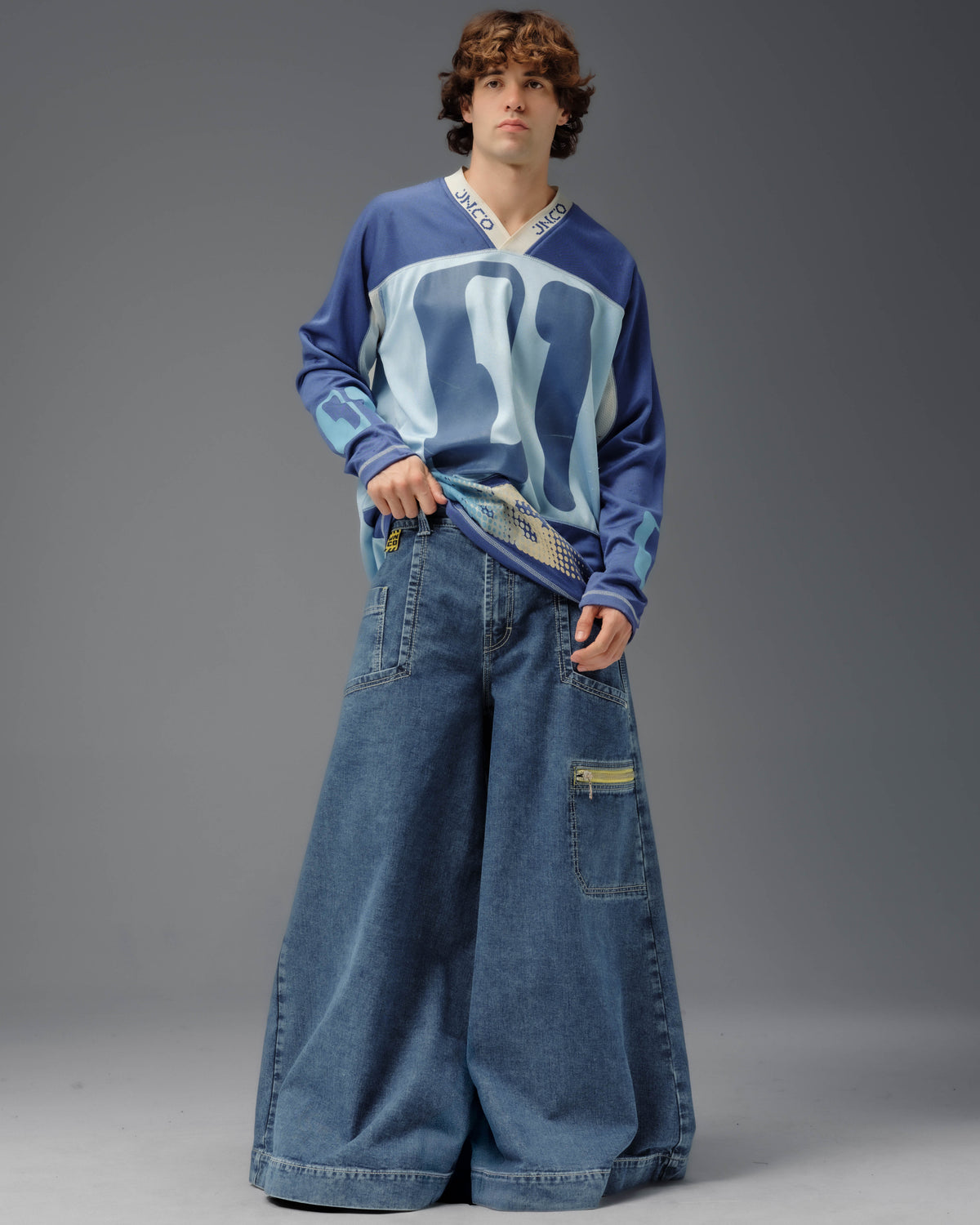
Baggy jeans did not begin as a carefully planned fashion trend. Their rise came through music, movement and youth cultures that wanted clothing to feel looser, more expressive and less controlled.
By the 1990s, oversized denim had moved from local scenes into music videos, skate parks, shopping centres and wardrobes around the world.
The silhouette has since been exaggerated, rejected, revived and reinterpreted, but it has never completely disappeared. This is the story of how baggy jeans moved from subculture into the mainstream—and why their influence still shapes denim today.
Seven chapters tracing the rise, decline and return of wide denim.
The Beginning
Denim was already tied to rebellion
Long before jeans became oversized, denim carried a reputation for practicality and resistance. It moved from workwear into youth culture during the twentieth century, becoming associated with cinema, music and generations that wanted to dress differently from their parents.
Early hip-hop style was far more varied than the simplified version often remembered today. In the 1970s and early 1980s, sharp sportswear, leather, customised trainers, tracksuits, hats and carefully coordinated colour all played important roles. The culture was built around looking fresh, not around following one fixed uniform.
That distinction matters because baggy jeans were not the starting point of hip-hop fashion. They were one stage in a much broader history of remixing existing clothing, changing proportions and giving familiar garments new cultural meaning.
The Shift
Hip-hop changed the proportions
As hip-hop grew into a global force, silhouettes became looser and more commanding. Oversized T-shirts, sports jerseys, jackets and wide denim gave performers a stronger visual presence while creating a style that felt distinct from conventional menswear.
The shift was not controlled by one artist, brand or city. Different scenes developed their own versions, mixing sportswear, workwear, luxury references and neighbourhood style. What connected them was the freedom to reshape familiar clothing around identity rather than traditional rules of fit.
Wide jeans also changed the relationship between the body and the garment. Instead of following the leg closely, denim dropped from the waist and created movement through the thigh, knee and hem. The extra fabric made every step more visible and gave the silhouette a relaxed confidence.
Cultural context
There was never one single origin story
Popular accounts often reduce baggy clothing to one explanation. In reality, the silhouette developed through overlapping influences: hip-hop performance, local street style, sportswear, workwear, skateboarding and changing ideas about masculinity and self-expression.
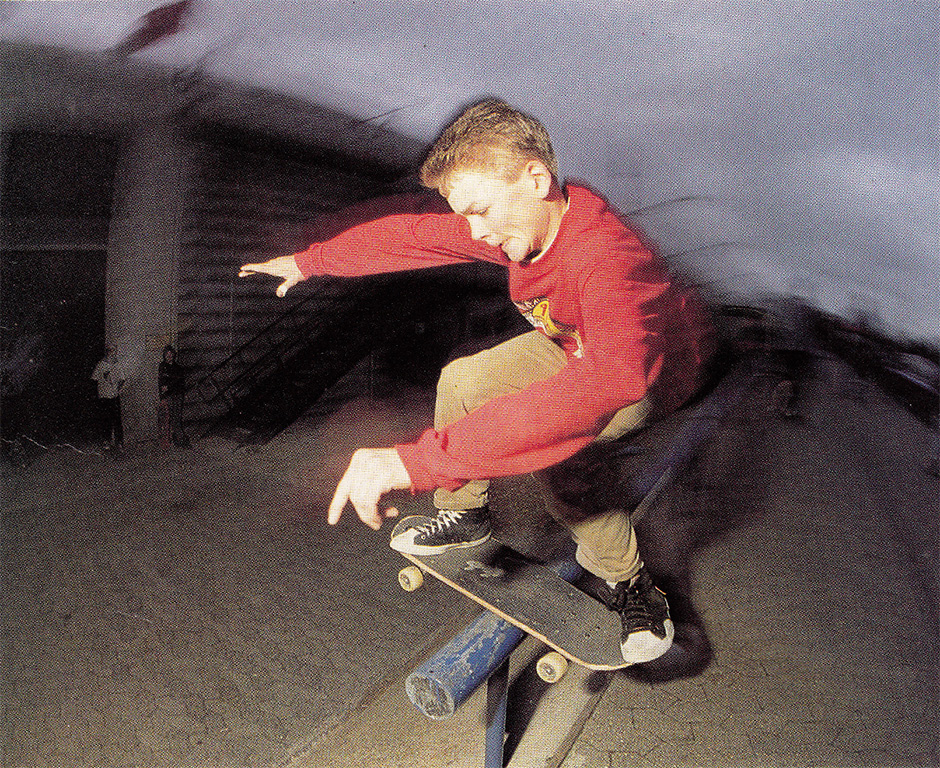
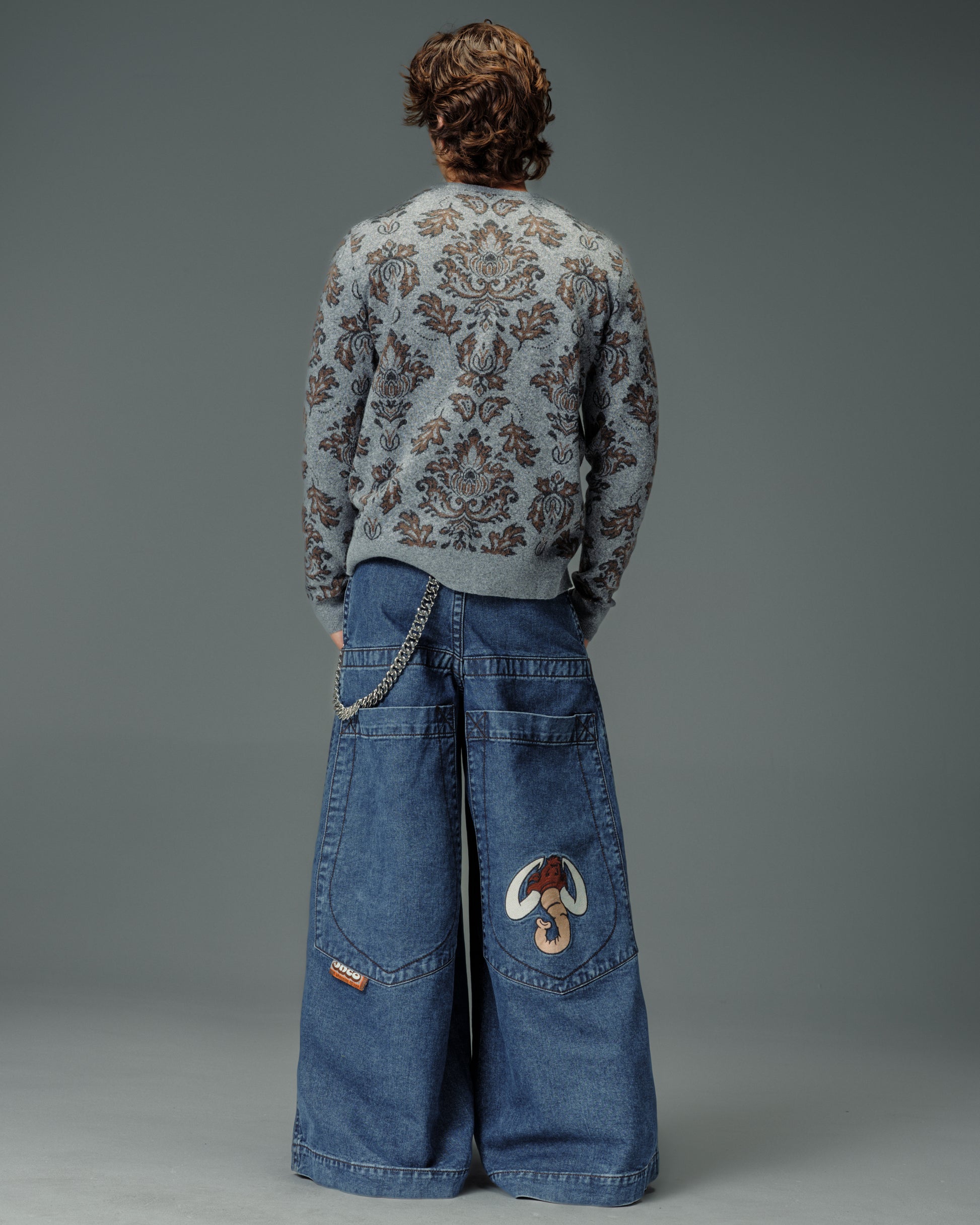
Skateboarding, decoration and oversized construction helped turn baggy denim into a complete visual identity rather than simply a looser fit. Photography: Tim Leighton-Boyce / RaD Magazine archive via Slam City Skates and JNCO Los Angeles.
The Function
Skateboarding made the silhouette functional
Skateboarding helped turn loose trousers into practical everyday clothing. A wider cut allowed greater movement through the hips and knees, while heavier denim could withstand repeated contact with concrete, grip tape and the ground.
Skaters were not dressing for a runway. Clothing needed to move, survive and still look right after being worn hard. Oversized jeans, loose chinos, graphic T-shirts, hoodies and substantial skate shoes developed into a recognisable uniform because they made sense both physically and culturally.
The low visual centre created by wide trousers and larger shoes also changed the balance of the outfit. The silhouette looked grounded and slightly exaggerated, particularly when hems stacked over footwear. That proportion became one of the most recognisable features of late-1990s and early-2000s skate style.
Extra room through the seat, thigh and knee made unrestricted movement easier.
Substantial denim could take repeated wear and develop character over time.
The silhouette separated skate style from cleaner, more conventional fashion.
The Breakthrough
From subculture to the mainstream
By the middle of the 1990s, baggy jeans were no longer confined to particular scenes. Music television, magazines, advertising and celebrity style carried the silhouette into the mainstream. Young people who had never visited an American skate park or hip-hop club could still recognise the look instantly.
Brands responded with increasingly generous cuts. Some jeans were simply relaxed through the leg; others widened dramatically from the hip to the hem. Large back pockets, carpenter details, contrast stitching, embroidered graphics and long inseams made the trousers feel more distinctive.
The silhouette travelled because it could be adapted. It worked with sports jerseys and trainers, but also with hoodies, work jackets, cropped tops, fitted vests and oversized outerwear. Baggy jeans became less of a single subcultural uniform and more of a foundation for different versions of youth style.
How a subcultural silhouette became a worldwide fashion language.
Hip-hop style takes shape
Sportswear, leather, trainers, customisation and coordinated looks establish a new fashion language.
Proportions become looser
Oversized clothing gains visibility through music, street style and performance.
Wide denim goes global
Baggy jeans move into mainstream youth fashion through music television, skate culture and retail.
The silhouette reaches its extreme
Ultra-wide legs, long inseams and oversized branding push proportions further.
The Extreme
When wide jeans became impossible to ignore
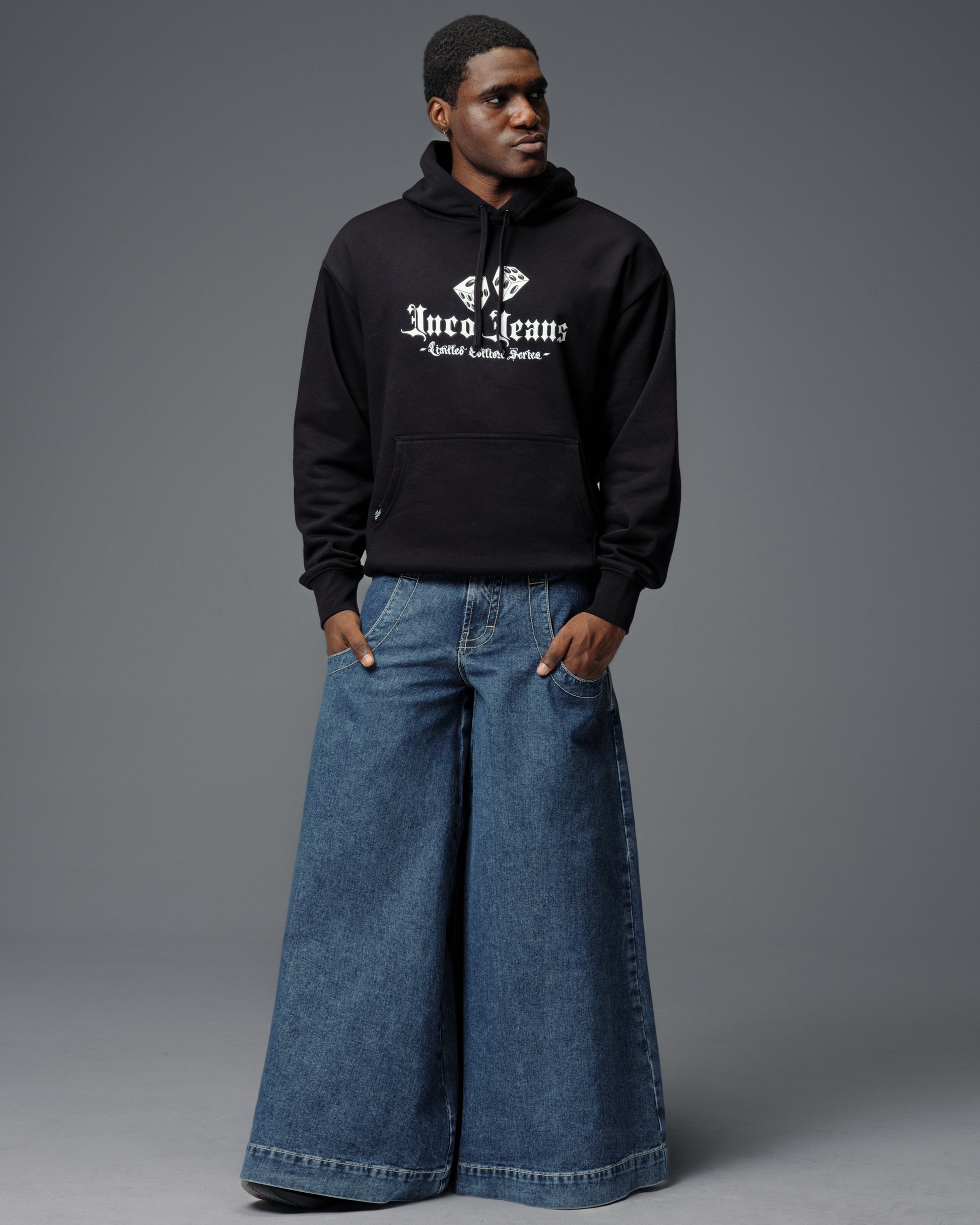
At the turn of the millennium, baggy jeans became bigger, lower and more heavily detailed. Some styles sat low on the waist and extended far beyond the shoe, producing deep stacks of denim around the ankle. Others used extremely wide leg openings that transformed the body into a moving column of fabric.
This period produced some of the most memorable denim designs in streetwear history. Brands including JNCO became known for proportions that looked almost unreal beside conventional jeans. Large embroidered back pockets and dramatic leg widths turned denim into a statement before the rest of the outfit had even been considered.
The excess was part of the appeal. Y2K fashion embraced visible branding, technical fabrics, bright colour, futuristic references and proportions that felt larger than life. Baggy jeans fitted naturally into that world.
We will explore that story in greater depth in our dedicated Vintage Archive feature on The History of JNCO jeans.
The Decline
Why the look faded from fashion
Fashion tends to move by reaction. After years of oversized clothing, the middle and late 2000s brought a strong shift towards slimmer jeans. Indie music, fitted tailoring and cleaner silhouettes made narrow denim feel new in comparison with the excess of the previous decade.
Skinny jeans eventually became a mainstream default, changing how tops, jackets and footwear were proportioned. For a period, wide denim was regularly treated as dated rather than directional. The most exaggerated styles became visual shorthand for the late 1990s and early Y2K era.
Yet baggy jeans never vanished completely. Skate scenes, workwear wardrobes, hip-hop fashion and people who preferred roomier clothing continued to wear them. Vintage pairs were stored, resold, altered and rediscovered. The silhouette was waiting for the wider fashion cycle to return.
The Return
Why baggy jeans came back
The modern revival did not happen because of one moment. It grew through several changes at once: renewed interest in 1990s and Y2K clothing, the expansion of vintage resale, social media archives, a preference for comfort and a broader move away from one dominant denim fit.
For younger wearers, baggy jeans did not necessarily feel nostalgic. They offered a silhouette that was different from the skinny denim associated with the previous generation. For older wearers, the return brought familiar references back in a less literal form.
Contemporary baggy jeans are also more varied than the versions commonly remembered from the 1990s. Some are softly relaxed; others are extremely wide. Rises range from low to high, while washes move between clean indigo, faded blue, dirty vintage tones, black denim and heavily distressed finishes.
The silhouette now sits across luxury fashion, skatewear, vintage clothing and everyday high-street denim. That breadth suggests it has moved beyond a short revival. Wide and relaxed jeans have become permanent options within the modern wardrobe.
Then and now
The influence remains, even when the details change
Modern baggy jeans may use cleaner washes, higher rises or more controlled leg widths, but the central idea is unchanged: denim does not need to follow the body closely to create a strong silhouette.
What defines baggy jeans today?
There is no single measurement that turns ordinary denim into baggy jeans. The effect comes from the relationship between the rise, seat, thigh, knee, leg opening and inseam.
A strong baggy fit usually has visible ease from the hip down, rather than widening only below the knee. The leg should fall with enough room to create movement, while the hem can sit cleanly over the shoe or stack more heavily depending on the intended look.
For practical guidance on choosing that balance, read How Baggy Jeans Should Fit. You can also explore our Baggy Bliss collection, created around relaxed and oversized bottoms.
Relaxed baggy
Room through the thigh and leg without an extreme opening. This is the easiest version to wear regularly.
Skate-inspired wide leg
A fuller leg, longer inseam and stronger stack over the shoe create a recognisable skate-influenced proportion.
Y2K oversized
Low rises, very wide openings, statement pockets and exaggerated length make the denim the main feature of the outfit.
Clean modern wide leg
A controlled wide cut with a cleaner wash and fewer details brings the silhouette into a more minimal wardrobe.
How baggy jeans changed the rest of the outfit
Baggy jeans influence every piece worn around them. Wider denim creates more weight below the waist, so tops can either match that scale or deliberately contrast against it.
Oversized T-shirts, hoodies and jackets produce a full relaxed silhouette rooted in skate and hip-hop style. A fitted vest, cropped top or shorter jacket creates a clearer difference between the upper and lower body. Neither approach is more authentic; they simply emphasise different eras and references.
Footwear matters because the hem often rests directly on the shoe. Skate trainers, substantial retro runners and chunkier shapes support the volume of the jeans, while slimmer shoes can make the leg appear even wider.
Accessories provide the final connection. A visible belt, compact shoulder bag, cap or simple piece of jewellery can make the historical reference feel intentional without turning the outfit into costume.
Find the version that works for your wardrobe
Baggy denim now ranges from softly relaxed everyday fits to exaggerated Y2K shapes. Start with the width, wash and rise you would genuinely wear.
Frequently asked questions
When did baggy jeans become popular?
Loose denim gained major visibility during the late 1980s and early 1990s, before becoming a mainstream youth fashion staple through hip-hop, skate culture, music television and global retail during the 1990s.
Who invented baggy jeans?
No single person invented the style. Baggy denim developed through overlapping influences including hip-hop, local street style, skateboarding, sportswear and workwear. Artists, skaters, designers and brands all helped spread different versions of the silhouette.
Why did skaters wear baggy jeans?
Loose jeans allowed movement through the hips and knees, while durable denim suited the physical wear of skateboarding. The shape also became an important part of skate culture's visual identity.
Why did baggy jeans go out of fashion?
Fashion shifted towards slimmer silhouettes during the 2000s. Skinny jeans eventually became the mainstream default, making oversized denim feel strongly associated with the previous decade.
Why are baggy jeans popular again?
The revival reflects renewed interest in 1990s and Y2K fashion, vintage resale, comfort and more varied denim silhouettes. Social media has also made historical fashion imagery easier for new audiences to discover.
Are baggy jeans only part of Y2K fashion?
No. Baggy jeans were prominent before the Y2K era and have roots in 1990s hip-hop and skate style. The early 2000s pushed the silhouette into more exaggerated forms, but it represents a much wider history.
Are baggy jeans still in style?
Yes. Relaxed and wide-leg denim now appears across vintage, skate, luxury and everyday fashion. The available cuts are broader than before, making the silhouette adaptable rather than tied to one specific trend.
Archive notes
Research and further reading
This feature draws on fashion-history material from the Museum at FIT, including its exhibition Fresh, Fly, and Fabulous: Fifty Years of Hip Hop Style, and the Fashion History Timeline's overview of 1990s dress. These sources emphasise that hip-hop fashion has always been broader and more varied than one silhouette.
The Archive Verdict
Baggy jeans were never simply a trend.
Their proportions changed. Their popularity shifted. Their meaning evolved. Yet the idea at the centre of the silhouette—comfort, individuality and freedom—remained remarkably consistent.
Hip-hop gave wide denim global visibility, skateboarding proved its practicality and Y2K fashion pushed it to its most recognisable extreme. The modern revival is not a perfect repeat of the past. It is the latest chapter in a history that never completely ended.
Explore Baggy Bliss

