

The History of Skate Shoes: From Vans to the Chunky 2000s
From simple vulcanised canvas shoes to reinforced suede, padded tongues and oversized cupsoles — skate footwear evolved alongside skateboarding itself.
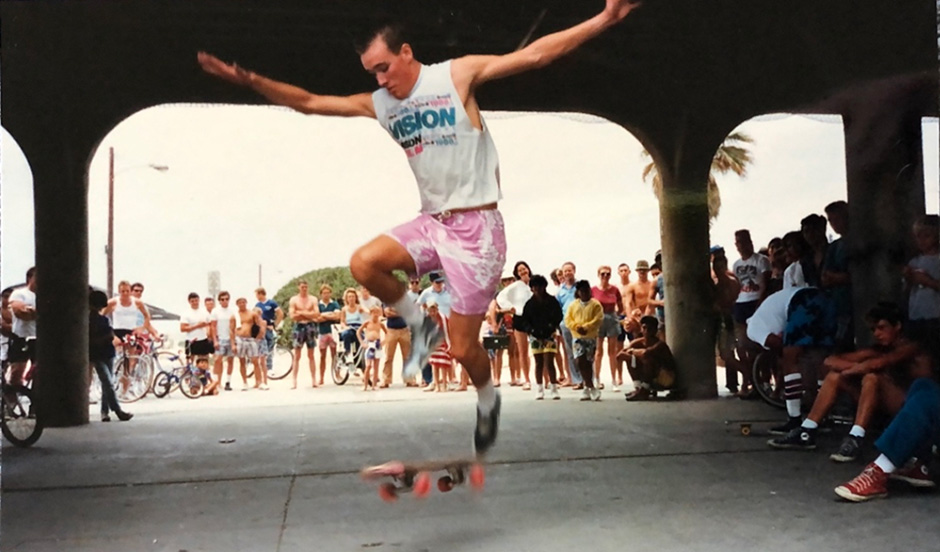
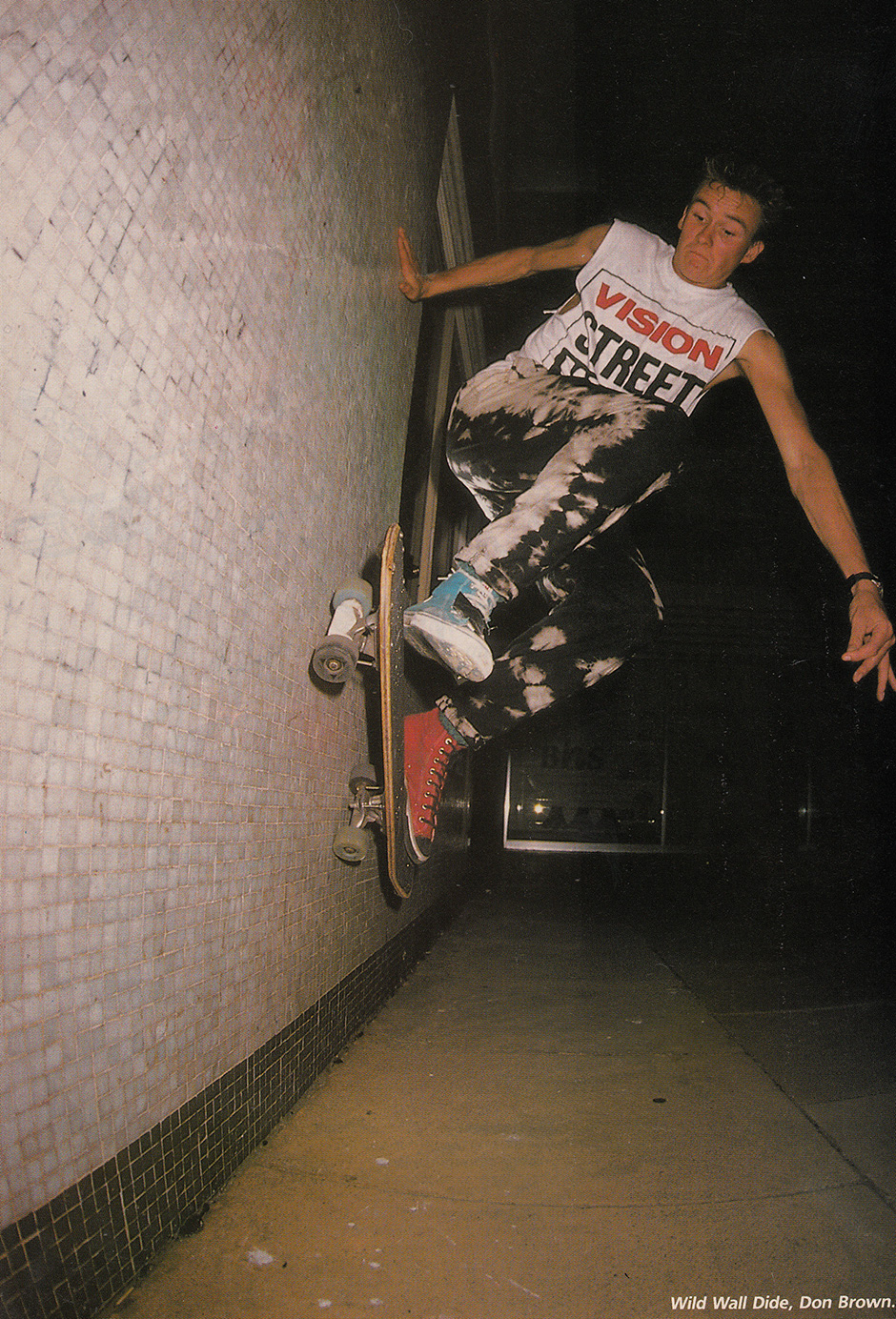
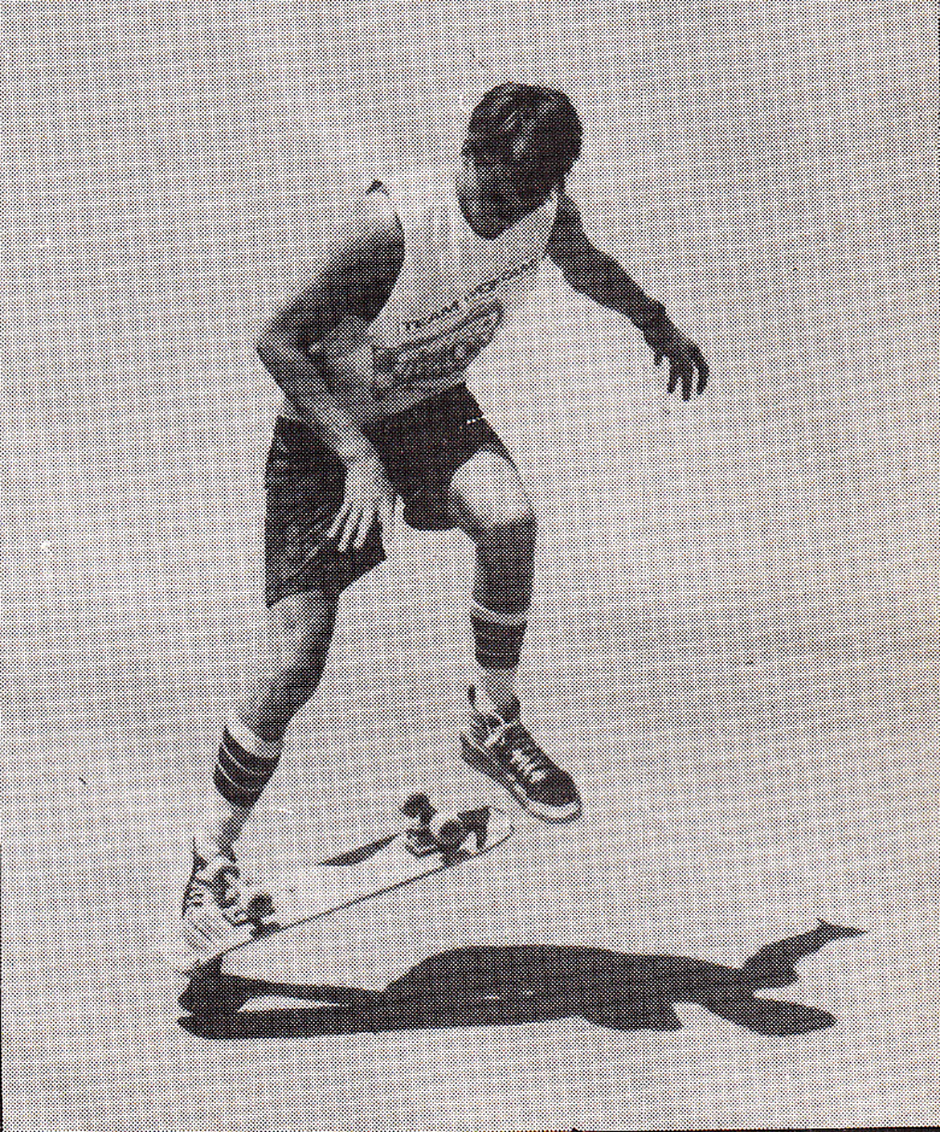
Don Brown at Huntington Beach Pier, 1986. Archive via Slam City Skates.
Few pieces of skate clothing have been shaped by skateboarding as directly as the shoe. Every ollie, flick and landing forces footwear against grip tape, concrete and the board itself. The shoe gets damaged because it is doing its job.
That created a design problem. Skateboarders needed enough grip and flexibility to feel the board beneath them, but enough durability to stop their shoes being destroyed immediately. As street skating became more technical and impact increased, cushioning and protection became increasingly important too.
Over several decades, solving those problems transformed skate footwear. Thin canvas shoes gave way to suede, reinforced stitching, cupsoles and enormous padded tongues. By the turn of the millennium, some skate shoes had become almost as exaggerated as the baggy jeans worn above them.
Then the cycle reversed. Shoes became thinner again. Vulcanised silhouettes returned. Today both sides of that history exist at once — and the substantial skate shoes once associated with the late 1990s and 2000s have returned alongside wider trousers.
The skate shoe changed because skateboarding kept asking more of it.
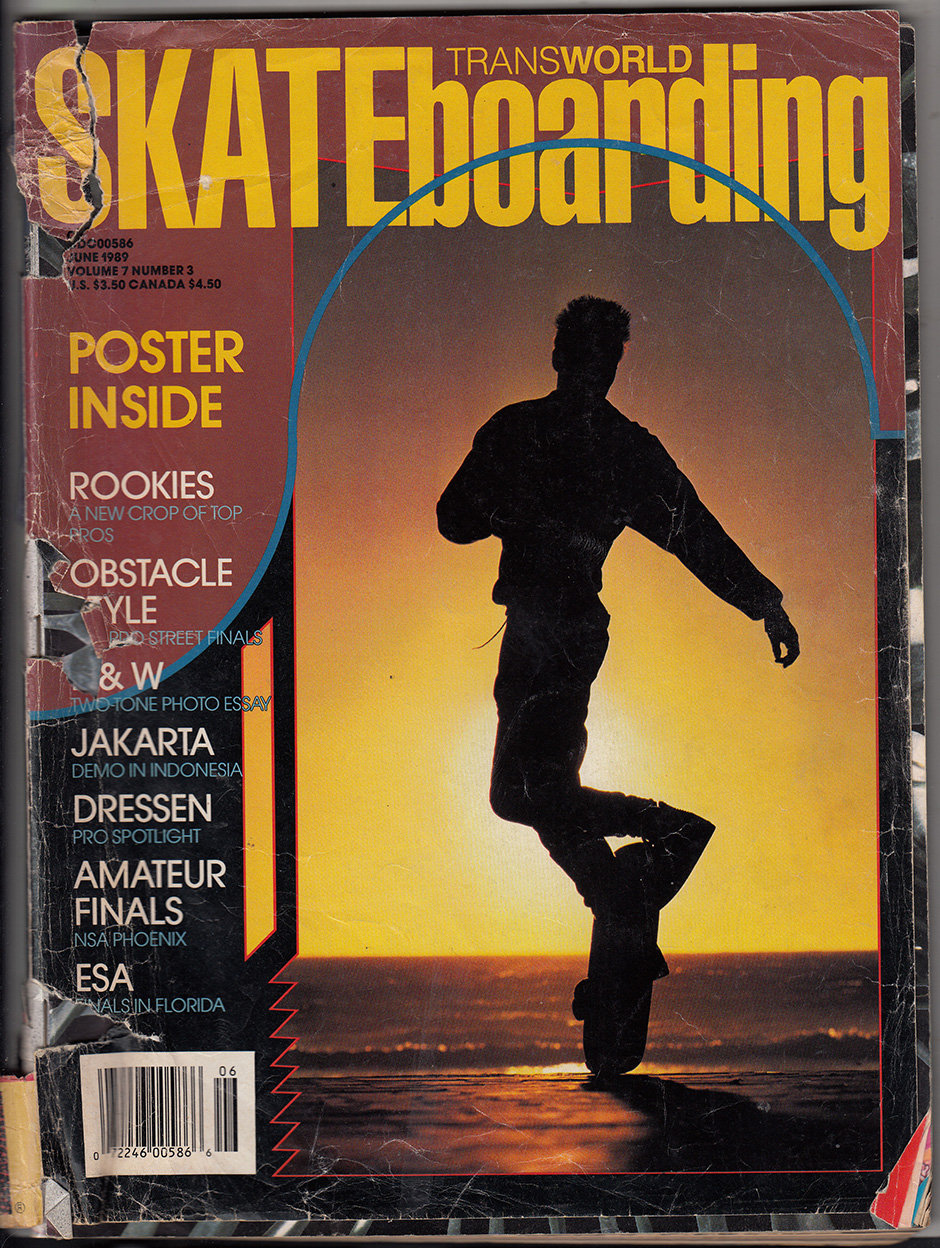
From rubber soles to technical footwear
Vans begins
The Van Doren Rubber Company opens in California, producing simple rubber-soled footwear that would become closely associated with skateboarding.
The Era arrives
Vans introduces the Era, developed with skateboarding in mind and featuring the padded collar that helped distinguish it from earlier canvas shoes.
Street skating develops
New tricks increase abrasion around the toe and side of the shoe, making durability increasingly important.
The éS Accel appears
Technical skate footwear increasingly combines suede, reinforcement, cushioning and substantial cupsole construction.
Maximum volume
Padded tongues, broad soles and layered uppers become defining features of the era.
The silhouette shrinks
Thinner vulcanised shoes and simpler uppers return alongside narrower clothing.
The archive returns
Wider trousers help revive interest in the substantial skate footwear of the 1990s and 2000s.
Before the skate shoe was really a skate shoe
Early skateboarders did not begin with an industry designing specialised footwear around them. They used the shoes already available: canvas trainers, deck shoes and other simple rubber-soled footwear that happened to work well on a skateboard.
The characteristics that mattered were basic. A relatively flat sole created contact with the deck. Rubber provided grip. A flexible upper allowed the foot to move naturally rather than isolating it from the board.
Those features were not originally revolutionary. Their importance came from what skateboarders did with them.
As skating developed, footwear that allowed direct control of the board became increasingly recognisable as part of the activity itself.
Vans helped establish the basic skate-shoe language
The vulcanised foundation
Vans had been producing shoes since 1966, but its relationship with Southern California skateboarding became particularly important during the following decade.
The formula was simple: canvas or suede uppers, a relatively low profile and grippy vulcanised rubber soles. The construction gave skateboarders the flexibility and board contact they needed without making the shoe feel like specialist sporting equipment.
In 1976, Vans introduced the Era. Developed with skateboarding in mind, it added a padded collar while preserving the simple shape beneath it.
Why the simple shape survived
The vulcanised skate shoe survived because its advantages remained useful even after footwear became far more technical. A relatively thin sole could make the board feel immediate beneath the foot.
That simplicity would repeatedly disappear and return as skate footwear moved between board feel, protection and changing fashion.
Street skating started destroying shoes differently
The development of modern street skating changed what skateboarders required from footwear.
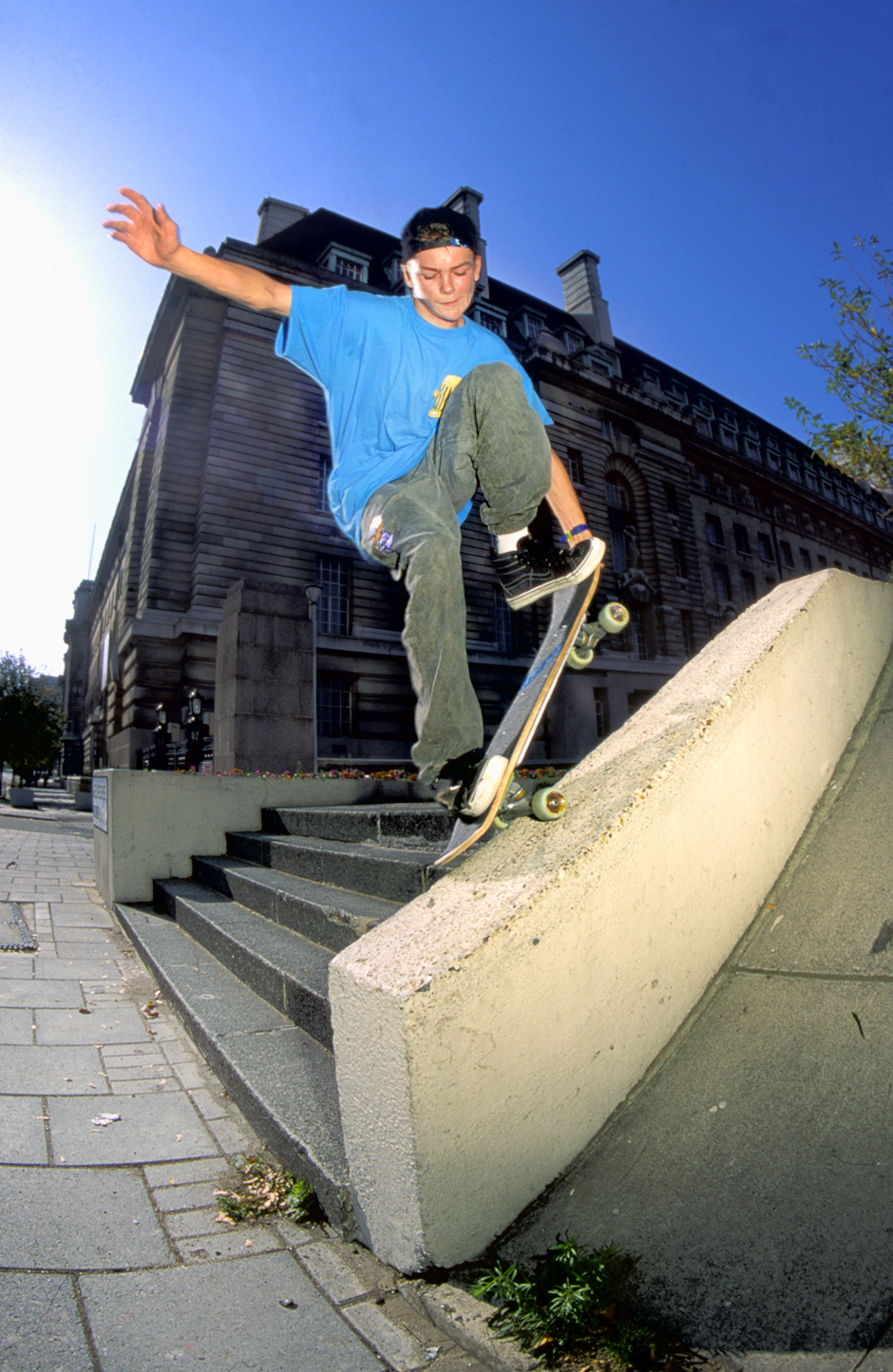
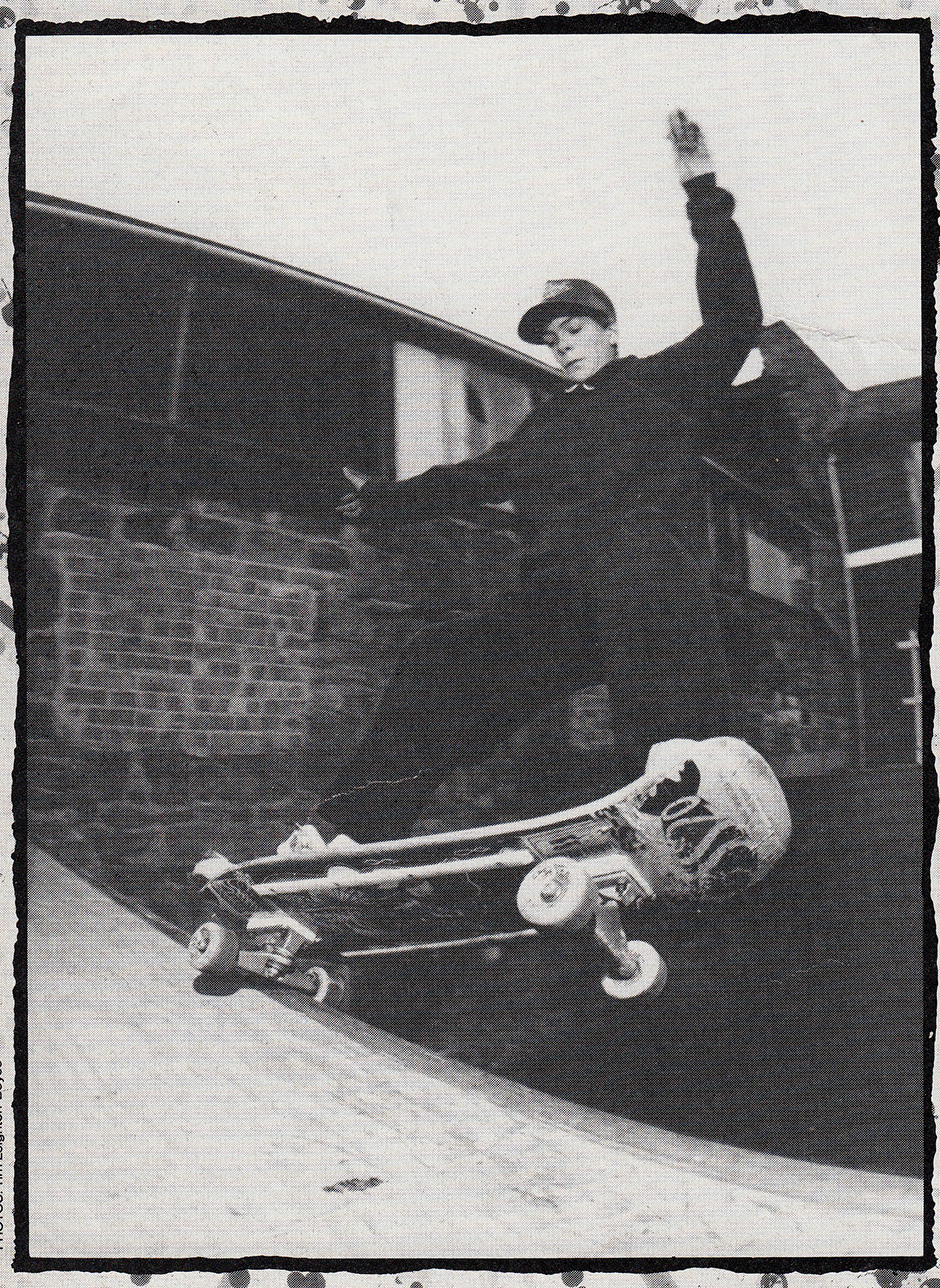
Tricks increasingly depended on the side and toe of the shoe sliding against grip tape. An ollie deliberately drags part of the upper across an abrasive surface. Flip tricks repeatedly place similar areas of the shoe into contact with the board.
Canvas could wear through quickly. Stitching could break. Laces could be shredded. Repeated impact from stairs, gaps and ledges also increased the value of cushioning beneath the foot.
Skate companies began treating those weaknesses as design problems. Suede became especially useful because it combined flexibility with greater resistance to abrasion. Toe areas gained reinforcement. Collars became thicker. Tongues grew.
The skate shoe was becoming equipment.
Grip tape turned wear into a design brief.
The 1990s changed how much technology could fit inside a skate shoe
The upper becomes armour
Skateboarding destroys footwear in predictable areas. Once companies understood those wear patterns, construction could be concentrated exactly where the shoe needed it.
Suede panels, additional stitching and reinforced toe areas helped a pair survive longer while still allowing the foot to move. The visual complexity of technical skate footwear partly grew from those layers.
Protection gains weight
As skating became more technical and impacts grew, a substantial sole offered another direction. Cupsole construction could provide greater structure and cushioning around the foot.
That created one of skate footwear's enduring tensions. A thicker shoe could provide more protection, while a thinner one could make the board easier to feel.
The skate shoe becomes visibly technical.
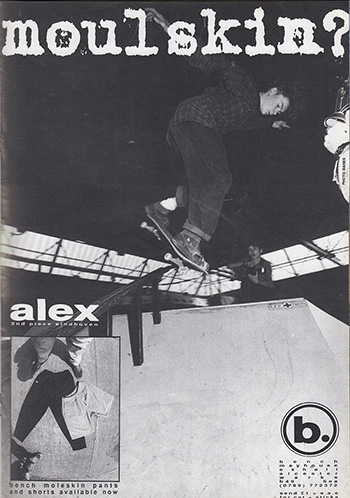
The technical skate shoe takes over
By the mid-1990s, skate footwear had moved a long way from the uncomplicated canvas shoes associated with earlier decades.
Dedicated skate brands were designing shoes around the repeated stresses of street skating. Cushioning, layered suede, reinforced stitching, padded tongues and structured soles became increasingly visible.
The éS Accel, introduced in 1995, became one of the clearest expressions of the period. Its broad shape, padded tongue and substantial construction offered a recognisable alternative to the thin vulcanised shoe.
The importance of shoes like the Accel was not simply that they looked different. Their appearance made the technical development of skate footwear visible.
Protection had become proportion.
The shoe becomes a piece of skate technology
The Accel
The original éS Accel arrived at a moment when skate footwear was becoming more specialised. Its padded tongue, reinforced upper and substantial sole reflected a growing expectation that a skate shoe should provide more than grip.
The shape became influential enough to survive its original era. Its continued relevance demonstrates how quickly a functional solution can become a visual archetype.
The tongue becomes part of the silhouette
Thick tongue padding had practical value, but by the late 1990s its visual effect was impossible to ignore. The top of the shoe became broad and substantial, particularly when the tongue sat beneath an equally wide trouser hem.
A functional detail had become one of the easiest ways to recognise the era.
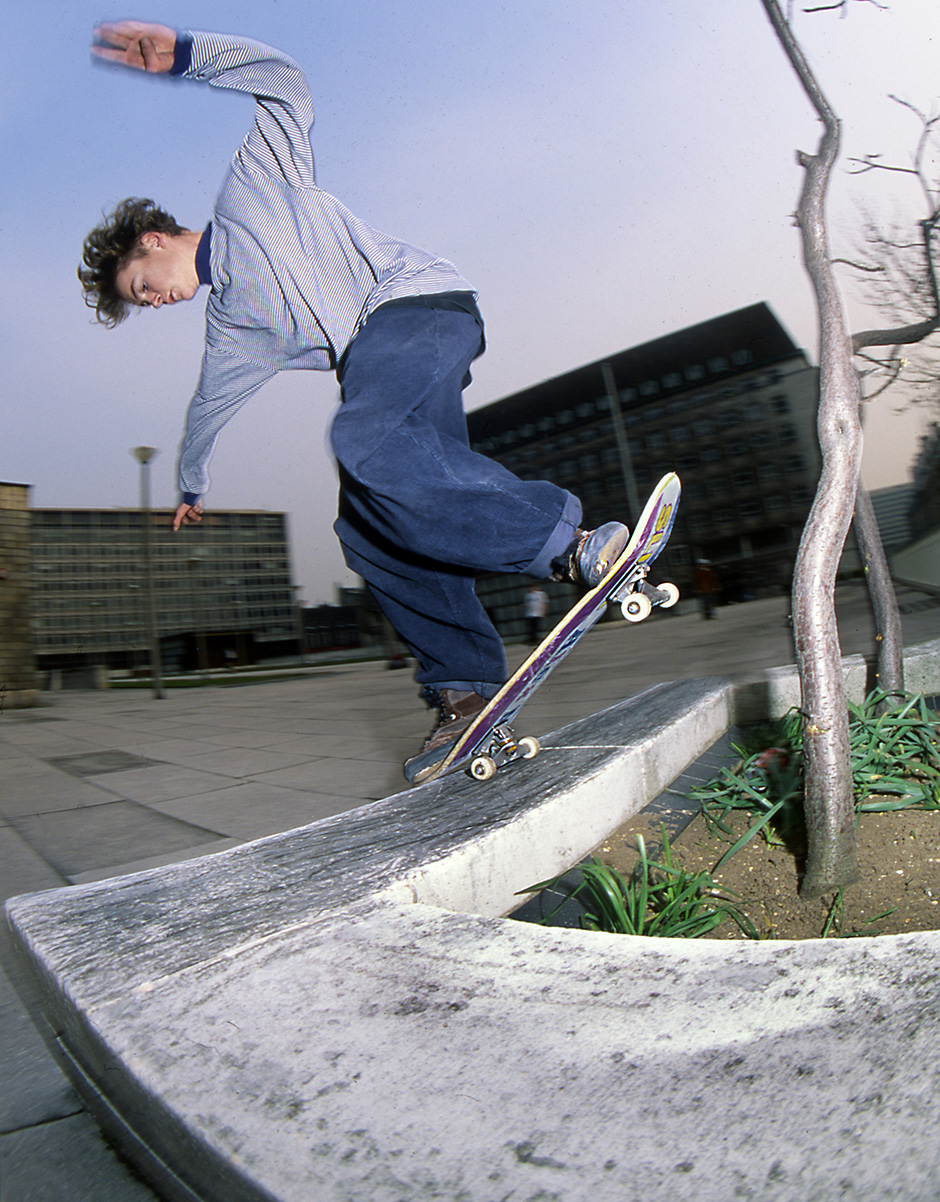
Then skate shoes got enormous
By the turn of the millennium, the technical skate shoe had reached its most exaggerated form.
Tongues became thicker. Soles became broader. Heels grew more substantial. Uppers combined multiple overlapping panels of suede, leather and mesh. Logos expanded across increasingly complicated shapes.
Some of that volume still served a purpose. More cushioning could soften impact. Reinforcement could extend the life of the shoe. Padding could protect the foot.
But functionality was no longer the whole explanation.
Chunkiness had become an aesthetic in its own right.
By the 2000s, protection had become style.
The chunky skate shoe matched the clothes above it
The shoe balanced the trouser
Skate footwear does not exist separately from the clothing above it. During the late 1990s and early 2000s, extremely loose jeans and cargo trousers were already central to skate style.
A very small shoe could disappear beneath a huge leg opening. A substantial shoe created enough visual weight to balance the trousers. Wide denim could stack across a padded tongue and broad sole rather than swallowing the footwear completely.
A shoe that looked engineered
The complexity of the millennium skate shoe became part of its appeal. Panels, stitching, ventilation, cushioning and logos could all remain visible rather than being hidden inside a clean upper.
The result looked almost mechanical. It communicated that the shoe belonged to a specific activity even when it was worn away from a skateboard.
Technical footwear becomes everyday youth style.

The skate shoe left the skate shop
The 2000s did not simply make skate footwear larger. They made it more visible.
Skateboarding was reaching wider audiences through television, video games, music and national retail. Shoes offered an unusually easy way to participate in the look.
Someone did not need to wear an entire skate uniform to wear skate shoes. Vans, DC, etnies, éS and other specialist names could sit beneath ordinary jeans and still carry a connection with the culture.
That accessibility helped turn skate footwear into everyday trainers. Thick tongues, broad cupsoles and large logos became familiar in schools, shopping centres and music scenes far beyond established skate communities.
The product had moved beyond the activity that created it.
Skate footwear becomes everyday youth clothing
The shoe led the crossover
Footwear translated particularly easily because the customer did not need to understand every part of skate culture to appreciate the product. The shoes were comfortable, visually distinctive and already validated through the skaters who wore them.
Once distribution widened, the silhouette became familiar enough to survive outside its original context.
The specialist product becomes ordinary
Mainstream distribution inevitably separated some skate products from the local shops and communities that originally gave them meaning.
But it also meant the shape travelled. A teenager far from an established skate scene could recognise a thick tongue, broad sole and oversized logo as belonging to skate culture.
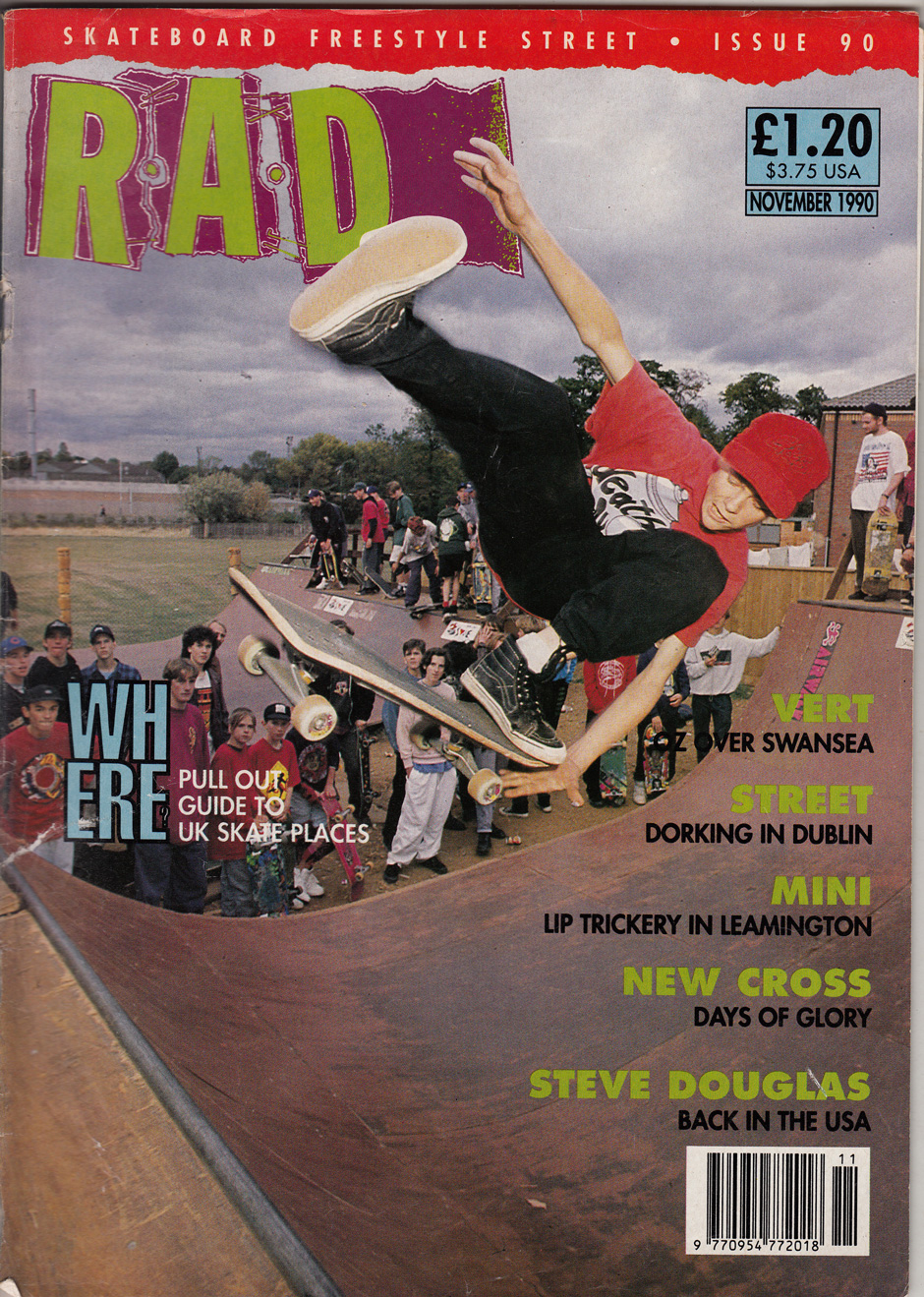
Then everything became thin again
The exaggerated technical skate shoe eventually created the conditions for its opposite.
During the late 2000s and 2010s, slimmer trousers and cleaner skate silhouettes gained ground. Footwear followed. Vulcanised construction, simpler uppers and thinner soles returned to prominence.
The change was visual, but it also revived the older argument about board feel. Removing some of the bulk could bring the foot closer to the deck and make the shoe feel more immediate.
What looked like a new direction was therefore partly a return to skate footwear's earliest principles.
The technology had advanced. The silhouette had gone backwards.
The skate shoe had become so technical that simplicity started to feel radical again.
Board feel returns to the centre
Less shoe, more board
The return of thinner footwear demonstrated that technical progress did not have to mean increasing physical size forever.
A cleaner vulcanised shoe could still incorporate modern materials and construction while delivering the low profile that earlier generations had valued.
The oversized skate shoe becomes archival rather than outdated.
The chunky skate shoe came back
Fashion eventually moved again.
As wider jeans, long jorts and oversized cargo trousers returned, the footwear beneath them began to require more visual weight. The proportions that had made chunky skate shoes look excessive during the slim-trouser years suddenly started making sense again.
Archive skate models were reassessed. Thick tongues, broad soles and complicated suede uppers could now be read as recognisable pieces of late-1990s and Y2K design rather than simply old-fashioned skate shoes.
The revival also exposed how closely clothing and footwear proportions move together.
When the trouser becomes wider, the shoe underneath it changes too.
Old technical shapes become desirable again
The archive changes meaning
A shoe can remain physically unchanged while the culture around it alters how it looks. During the slim-footwear years, an oversized technical skate shoe could appear dated. Beside contemporary wide denim, the same proportions can look deliberate.
That shift explains why older skate footwear has become increasingly relevant to the wider Y2K revival. The shoe already belongs to the silhouette that fashion is rebuilding.

The whole history now exists at once
Contemporary skate footwear no longer follows one single silhouette. Thin vulcanised shoes still exist beside padded technical models, cupsoles, archival reissues and modern hybrids.
That variety reflects the central tension that shaped the category from the beginning. Skateboarders still have to balance board feel, durability, cushioning and personal preference. There is no single construction that solves every requirement perfectly.
Outside skateboarding, the cultural influence is just as visible. Chunky skate shoes have become part of the wider return to Y2K proportions, particularly when worn beneath baggy jeans, wide trousers and long shorts.
The cycle is almost complete. Footwear originally enlarged to survive skateboarding became a fashion silhouette, fell out of fashion and returned as an archive reference.
Final frame
The skate shoe carries the history of the skating that shaped it
The evolution from thin canvas to reinforced suede and heavily padded technical footwear was never simply a sequence of fashion trends.
Every stage represented another attempt to balance grip, durability, protection and board feel. Street skating demanded stronger uppers. Bigger impacts encouraged cushioning. Reinforcement created layers. Padding created volume.
Skateboarding then did what it has repeatedly done with practical clothing: it turned those functional decisions into style.
The enormous technical shoe became as recognisable as the baggy denim stacked over it. When fashion eventually moved away, the shape waited in the archive until wider proportions made sense again.
From a flat rubber sole to the padded silhouettes of the 2000s and back again, the history of the skate shoe is really the history of skateboarders asking footwear to keep up.


