

How Skate Fashion Became Mainstream
Skate style was built in car parks, plazas and independent shops. Then magazines, television, video games and fashion carried its loose silhouettes far beyond the people who first wore them.
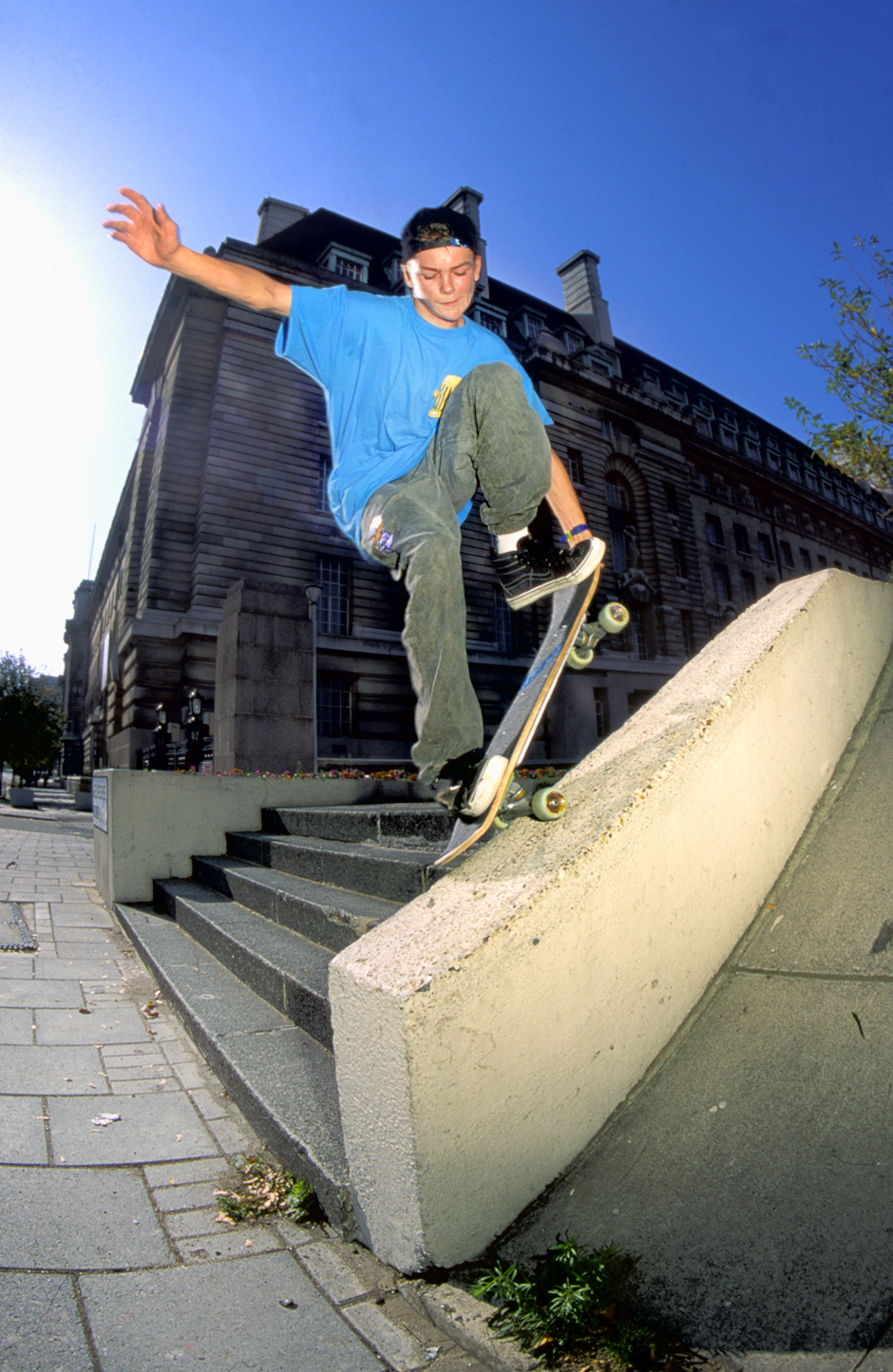
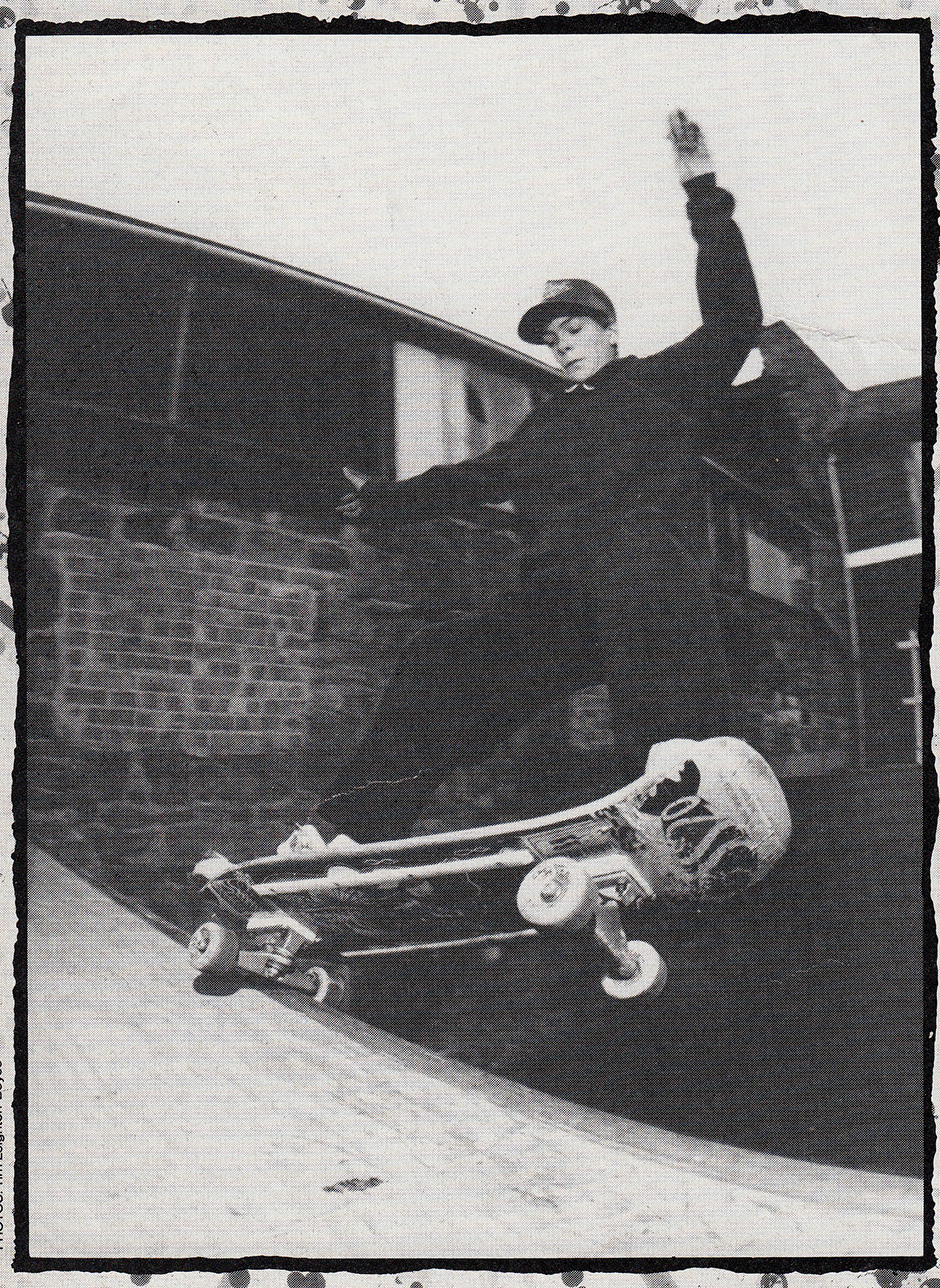
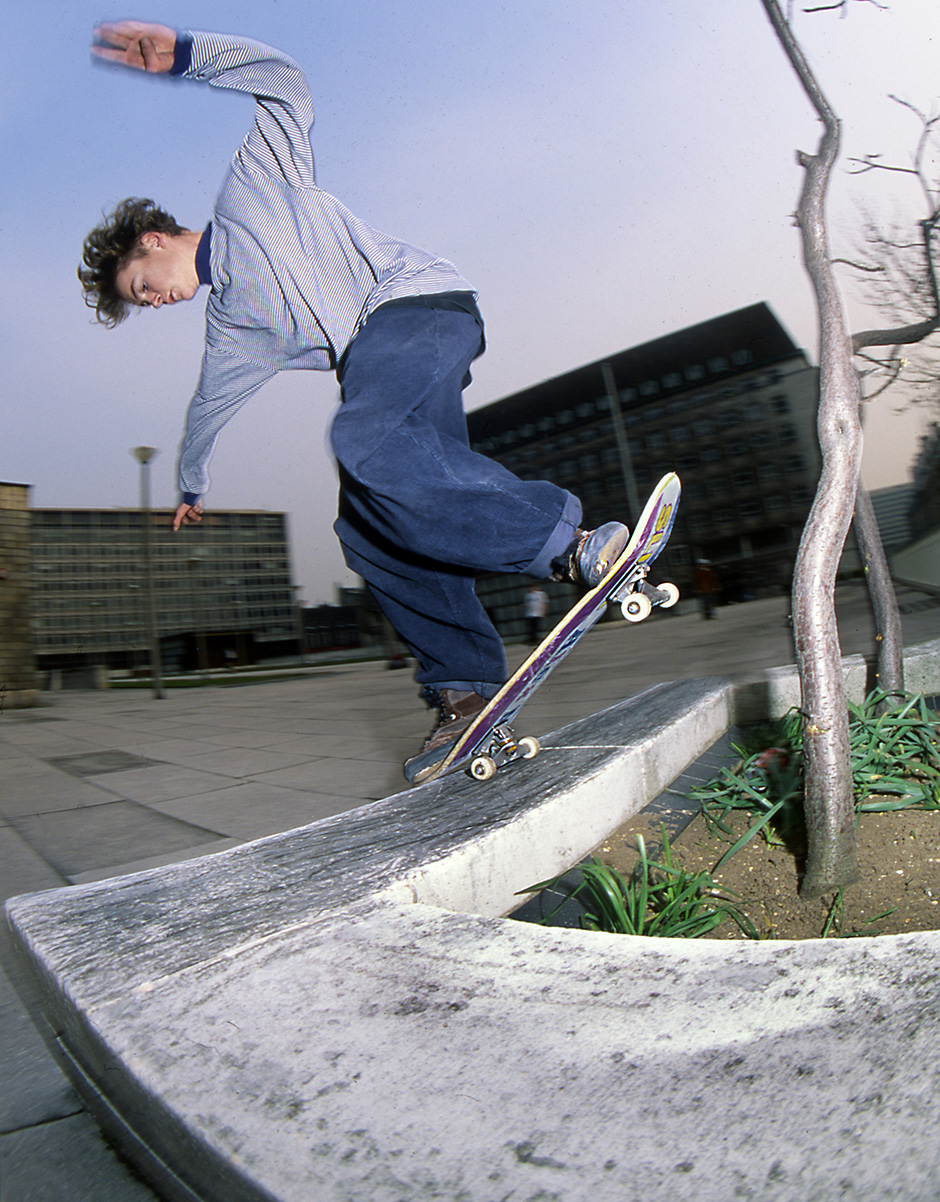
Photography: Tim Leighton-Boyce / archive via Slam City Skates.
Skate fashion did not become mainstream because the industry designed a trend and persuaded people to follow it. It happened in reverse. Skaters developed a practical, recognisable uniform away from conventional fashion, and the wider culture gradually realised that it wanted the same sense of freedom.
The silhouette changed with skateboarding itself. Street skating favoured clothes that could move, survive rough ground and remain comfortable through an entire day outside. Loose denim, roomy work trousers, long shorts, layered T-shirts and durable shoes became familiar because they worked. Their apparent lack of polish was part of the appeal.
By the end of the 1990s, skate style was appearing in music videos, shopping centres, television advertising and bedrooms filled with console games. During the decades that followed, luxury houses, global sportswear companies and high-street retailers repeatedly translated the look for new audiences. The route from pavement to runway was not direct. It passed through magazines, VHS tapes, local shops, competitions and the personalities who made every item feel lived in.
The mainstream did not invent skate style. It learned how to recognise it.
From subculture to shared language
Thrasher begins publishing
Skateboarding develops a magazine voice that treats the culture as a complete world rather than a sporting category.
Mail order extends the shop
Adverts and catalogues allow independent brands, graphics and equipment to reach skaters far from established scenes.
The X Games arrive
ESPN places skateboarding inside a recurring global television spectacle without removing its outsider image.
Tony Hawk lands the 900
A televised contest moment gives skateboarding one of its most widely recognised images.
Tony Hawk’s Pro Skater
The video game introduces millions of players to skate tricks, music, brands and clothing through an interactive world.
Skate shoes reach every high street
Chunky footwear, loose jeans and graphic tees move from specialist shops into everyday youth wardrobes.
Streetwear meets luxury
Collaborations and runway collections treat skate references as a permanent part of international fashion.
Skateboarding enters the Olympics
The activity once pushed away from public spaces appears on sport’s largest institutional stage.
Print made local style visible
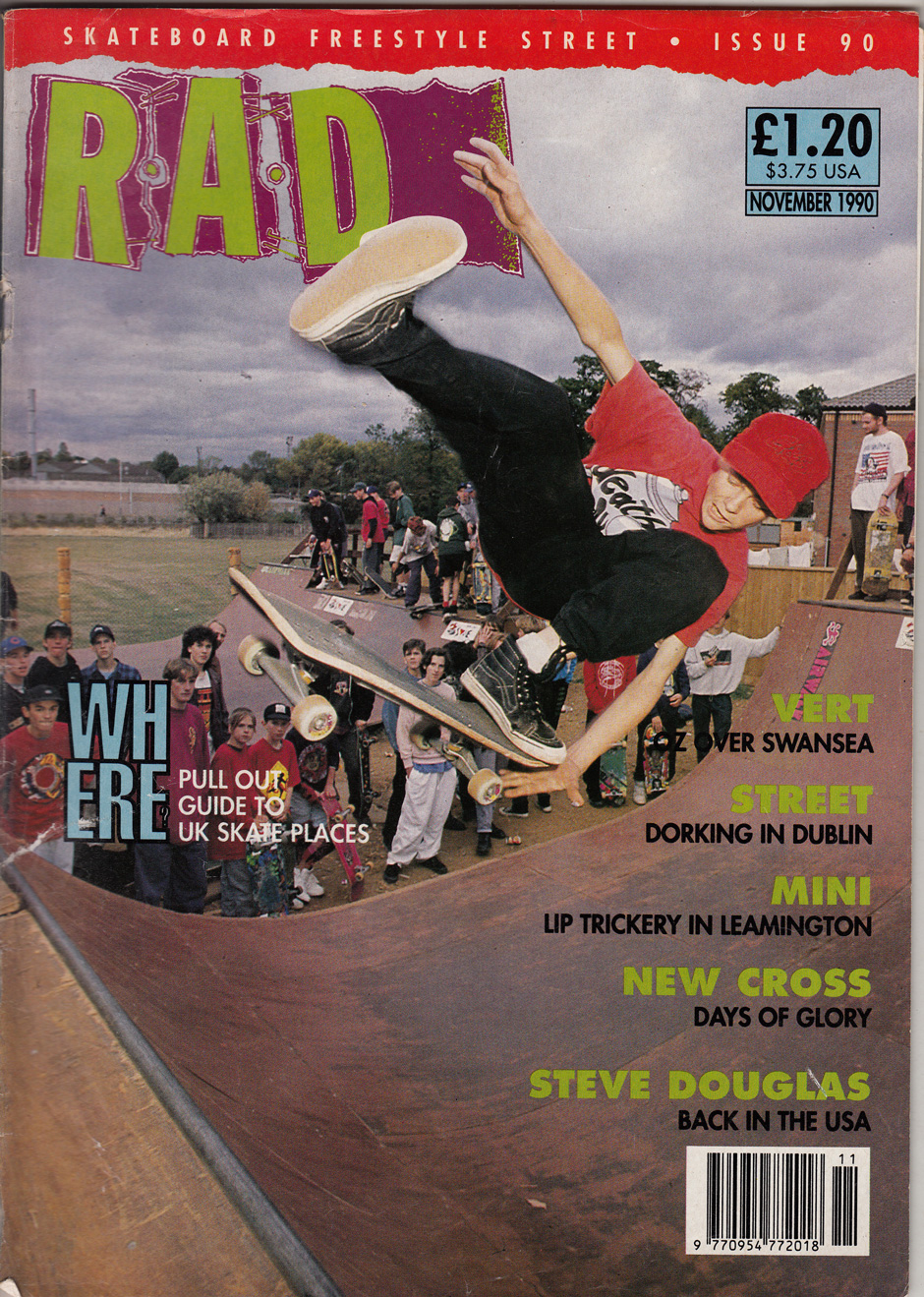
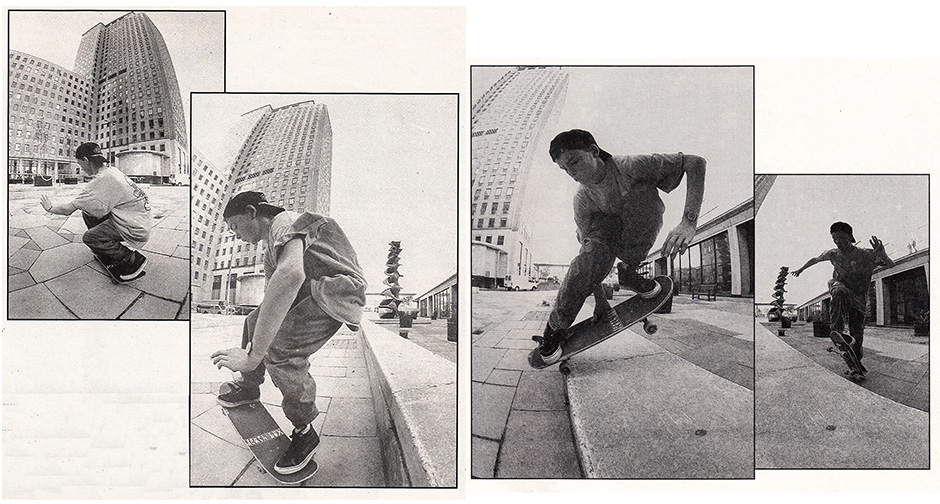
Early skate scenes were intensely local. A particular plaza, ramp or shop could develop its own way of skating and dressing, but seeing what happened elsewhere required effort. Magazines became the bridge. A photograph arriving weeks after it was taken could still feel like news from another world.
Publications such as Thrasher, Transworld and Britain’s RaD did more than report tricks. They framed the clothing around them. Readers absorbed how trousers fell over shoes, how shirts were layered and how a skater carried an outfit while moving. The fashion information was rarely separated from the action. That made it more persuasive.
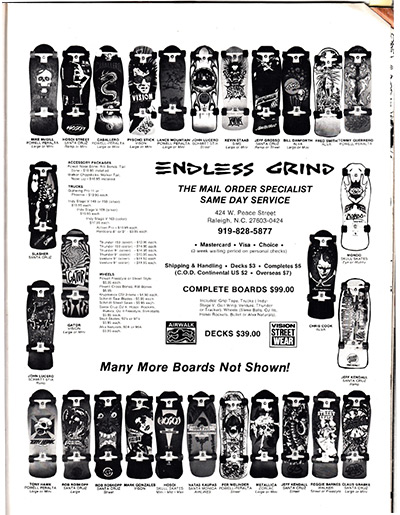
Magazine adverts amplified the effect. A board company could compress its identity into a page of photography, illustration and deliberately strange copy. A shoe could become desirable because it appeared beneath a favourite skater, not because a conventional campaign explained its features.
Television made the outsider legible
- Launched
- 1995
- Medium
- Televised action-sports competition
- Visual impact
- Logos, loose clothing and skate shoes seen at broadcast scale
- Legacy
- Made professional skaters recognisable beyond specialist media
The X Games
The X Games gave television a format it understood: scheduled events, scores, commentary and recognisable athletes. Skateboarding remained visually different from established sport, but it now appeared inside a repeatable broadcast package.
That visibility mattered for clothing. Viewers who had never entered a skate shop could recognise the oversized T-shirts, wide trousers, baseball caps and substantial shoes worn by competitors. Sponsorship logos became part of the image, while skaters became personalities capable of carrying brands into a much larger market.
- Breakthrough moment
- The 900 at the 1999 X Games
- Known for
- Vert skating, sponsorship and cross-media recognition
- Fashion effect
- Skate clothing became visible to family audiences
- Legacy
- One of skateboarding’s first universally recognised figures
Tony Hawk
Tony Hawk’s mainstream reach did not depend on one event, but the televised 900 in 1999 became a perfect image for the moment. It was easy to explain, visually dramatic and attached to a person whose career already crossed competition, sponsorship and media.
Hawk helped make professional skateboarding understandable without making it ordinary. The clothing, equipment and logos around him entered homes as part of a story about persistence and progression. Skate style gained familiarity without losing all of its distance from conventional sport.
The screen becomes the new skate shop window.

The video game turned participation into immersion
Tony Hawk’s Pro Skater did something television could not. It allowed the audience to enter a version of skate culture rather than simply watch it. Players learned trick names, moved through recognisable urban spaces and encountered skate brands as part of the game’s environment.
Clothing and music carried as much atmosphere as the mechanics. Graphic tees, cargo trousers, long shorts and branded shoes appeared beside a soundtrack that connected punk, hip-hop and alternative music. The game presented skateboarding as a complete cultural package.
For many players, this was the first sustained contact with skate imagery. They could adopt the clothes before owning a board, or recognise the brands before understanding the differences between street and vert. Fashion became an accessible entrance into the culture.
You no longer needed a local scene to recognise the uniform.

The specialist product becomes everyday clothing
- Original purpose
- Grip, impact protection and durability
- Mainstream appeal
- Comfort, recognisable shape and strong branding
- Key forms
- Vulcanised classics and padded technical cupsoles
- Legacy
- Skate shoes became everyday trainers
The shoe led the way
Footwear was one of skate fashion’s easiest points of entry. A consumer could wear Vans, DC, etnies or éS without adopting the entire silhouette. The shoes were comfortable, visually distinctive and already validated by skaters.
As distribution widened, footwear introduced the rest of the look. Thick tongues and broad cupsoles appeared balanced beneath wide hems. Slim vulcanised shoes brought a cleaner alternative. Both routes became familiar enough to survive beyond any single trend cycle.
- Period
- Late 1990s through the 2000s
- Key change
- Specialist brands reached national retail chains
- Core pieces
- Graphic tees, hoodies, denim and skate shoes
- Legacy
- Skate style became ordinary youth clothing
The mall era
Mainstream retail simplified the culture into repeatable products. Graphic T-shirts, hoodies, wide jeans and logo-heavy shoes could be stocked in volume and sold without the local knowledge that shaped an independent skate shop.
Something was inevitably lost in translation, but the expansion also made skate-derived clothing available to people who lived far from major scenes. The look became a shared youth language across towns, schools and music subcultures.

Music made the silhouette travel faster
Skateboarding and music had long exchanged energy. Punk offered speed and independence; hip-hop brought rhythm, graphic language and a powerful approach to proportion. By the late 1990s and early 2000s, alternative music television placed these overlapping scenes before the same audience.
Bands wore skate shoes. Skaters appeared in music videos. Tours and festivals placed musicians, board companies and clothing labels inside the same commercial ecosystem. The distinction between skatewear and general youth fashion became increasingly difficult to draw.
The result was not one fixed uniform. Some audiences adopted very wide denim and oversized tops; others chose slimmer trousers with classic vulcanised shoes. Both looked back to skate culture for credibility.
Streetwear and fashion learned to borrow differently
- Founded
- 1994
- Origin
- Downtown New York skate shop
- Known for
- Limited releases, artist projects and collaborations
- Legacy
- Connected skate credibility with global fashion demand
The shop becomes a fashion model
Supreme’s influence extended beyond any individual garment. Its downtown shop, skate-team identity and limited releases offered fashion a different model of desire. Scarcity, community and cultural fluency mattered more than conventional seasonal advertising.
As collaborations expanded, skate references could enter spaces that once treated the culture as too informal or abrasive. The process reached a symbolic peak when luxury fashion openly embraced logos, shapes and release strategies associated with streetwear.
- Adopted
- Skate silhouettes, graphics and collaborative release culture
- Key tension
- Inspiration versus extraction
- Visual result
- Wide trousers, skate shoes and workwear on runways
- Legacy
- Skate references became part of fashion’s permanent vocabulary
The runway looks back to the pavement
High fashion did not simply copy a single skate outfit. It absorbed a method: mixing practical clothing with cultural signals, allowing proportion to feel slightly wrong and treating wear as evidence rather than damage.
Wide denim, carpenter trousers, distressed shoes and oversized graphics repeatedly returned in designer collections. Their price and setting changed, but the visual reference remained clear. Clothing shaped by movement had become clothing used to communicate taste.

Mainstream, but never completely absorbed
Skateboarding’s Olympic debut confirmed an institutional acceptance that would have seemed improbable during eras defined by bans, security guards and improvised street spots. Yet mainstream recognition did not erase the culture’s local foundation.
The strongest skate style still emerges from use. A pair of trousers looks different after sessions, a shoe changes as grip tape wears through it and a T-shirt gains meaning through association with a shop, video or crew. Fashion can reproduce the silhouette, but not automatically the history carried inside it.
Today’s return to baggy jeans , long jorts , cargo trousers and oversized T-shirts continues the same exchange. Skate culture develops a shape; fashion enlarges its audience; skaters alter the shape again.
Final frame
The contradiction remains the point
Skate fashion became mainstream through a series of translations. Magazines turned local scenes into images. Television turned skaters into recognisable personalities. Video games turned spectators into participants. Retail turned specialist products into everyday clothing, and fashion transformed subcultural references into international design language.
Each stage widened the audience while creating arguments about authenticity. Those arguments have never disappeared because skate culture still depends on participation, place and community. The clothes can travel anywhere. Their original meaning remains connected to the people who wore them because they needed to move.


